

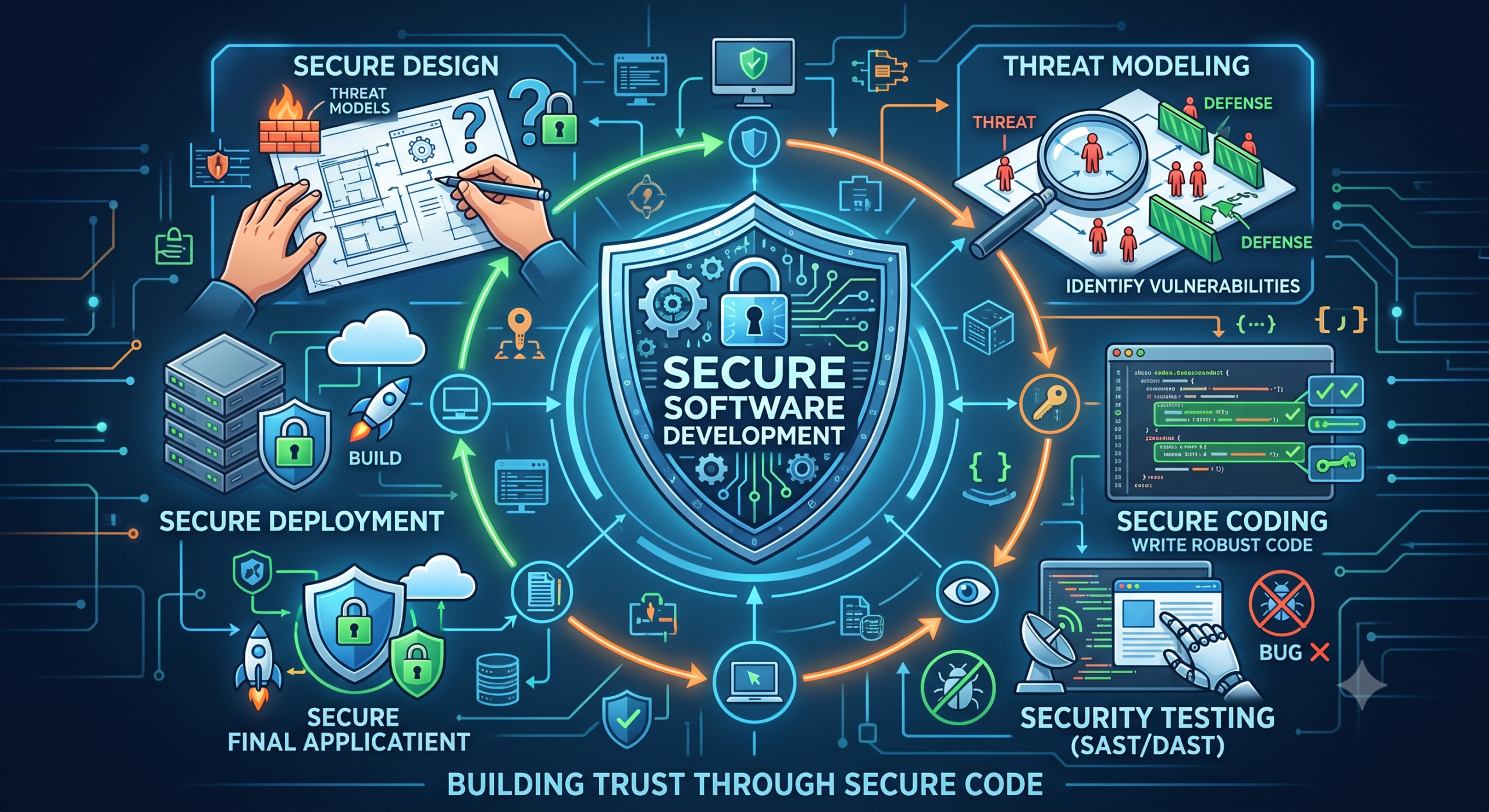
Secure Software Development (Computer Science)
Validated by University of Essex Online
Duration
13 weeksStudy Mode
OnlineTotal Tuition
£1,492Monthly Payment
£485Qualification
Micro-Credentials / Short CoursesStart Date
July, OctoberProgramme Overview
The Secure Software Development online professional course from the University of Essex Online is a 13-week, part-time program designed to equip learners with the practical knowledge and technical skills required to develop secure, reliable, and resilient software applications. The course explores the complete Software Development Life Cycle (SDLC), secure coding principles, software design methodologies, code testing, and modern development frameworks such as Agile and TOGAF. Students learn how to identify software vulnerabilities, apply secure programming practices, and develop applications that meet today's cybersecurity standards. For Caribbean professionals and graduates, this course offers an excellent opportunity to build globally relevant software engineering skills that support digital transformation initiatives across government, banking, telecommunications, healthcare, tourism, and fintech sectors.
Entry Requirements
Applicants are expected to meet the following requirements:
No formal academic qualifications or previous programming experience are required.
A good standard of English language proficiency.
Applicants whose first language is not English should demonstrate English equivalent to IELTS Academic 6.5 or complete the University's free English assessment.
The course is suitable for beginners, career changers and professionals seeking to upskill.
Who is this course for?
This professional course is ideal for:
Computer Science graduates
Software Developers
IT Professionals
Cybersecurity Professionals
Network Administrators
Systems Analysts
Application Developers
Technology Consultants
Government ICT Officers
Caribbean professionals seeking international computing qualifications
Individuals planning to progress into a Postgraduate Certificate, Postgraduate Diploma or MSc in Computer Science
The flexible online delivery makes it particularly suitable for working professionals across the Caribbean who wish to study without interrupting their careers
Career Opportunities
Secure Software Developer
Software Engineer
Application Developer
Cybersecurity Analyst
Secure Systems Developer
DevSecOps Engineer
Software Quality Assurance (QA) Engineer
Cloud Security Engineer
Security Consultant
IT Solutions Architect (with further experience)
Programme Highlights
Students begin by learning the theory behind software abstraction, one of the most important concepts in modern programming. They compare different programming approaches—including object-oriented, functional, logical and dynamic programming—to understand how software can be designed for efficiency, flexibility and long-term maintenance. This foundation enables learners to make informed decisions when selecting programming methodologies for enterprise software projects across industries such as banking, tourism, healthcare and government digital services.
This section examines both traditional and modern Software Development Life Cycle models, including Agile and TOGAF. Students learn how security should be embedded into every stage of software development—from planning and requirements gathering to deployment and maintenance. The module emphasizes secure software engineering practices, risk management and the importance of integrating cybersecurity throughout the development process rather than treating security as an afterthought. These skills are increasingly valuable for Caribbean organizations investing in digital transformation and cloud-based services.
Learners explore industry-recognized secure coding standards and techniques for developing software that is resistant to cyber threats. The course covers common software vulnerabilities, defensive programming techniques, authentication, authorization, data validation and secure API development. Students develop an understanding of how secure programming practices protect organizations from data breaches, ransomware attacks and application exploits. These competencies are particularly relevant for financial institutions, e-commerce businesses and government agencies throughout the Caribbean.
The final component introduces automated techniques used to evaluate software quality and security. Students learn how static code analysis identifies vulnerabilities before software is executed, while dynamic testing evaluates software during runtime to detect hidden security flaws. They gain experience understanding testing methodologies that improve software reliability, maintainability and compliance with modern cybersecurity standards. These techniques are widely used by software engineering teams and cybersecurity professionals worldwide.
Related Courses
Advanced Diploma in Information Technology
Qualification: Professional Diploma
Duration: 12 months
Tuition: €4,000
View ProgrammeBachelor of Science in Business Information Technology (IT)
Qualification: Bachelor’s Degree
Duration: 3 Years
Tuition: €12,000
View ProgrammeBachelor of Science (BSc) in Artificial Intelligence
Qualification: Bachelor’s Degree
Duration: 3 years
Tuition: €10,500
View ProgrammeApply for This Programme
You need an UpCaria account before starting your application. Log in to your existing account or create a new one.
🎓 Scholarship Eligibility Checker
Select your country to check whether you may qualify for a scholarship for this programme.