

Emergency Preparedness and Management (PGCert)
Validated by Coventry University
Duration
1 yearStudy Mode
OnlineTotal Tuition
£3,480Monthly Payment
£290Qualification
Postgraduate CertificateStart Date
January May, SeptemberProgramme Overview
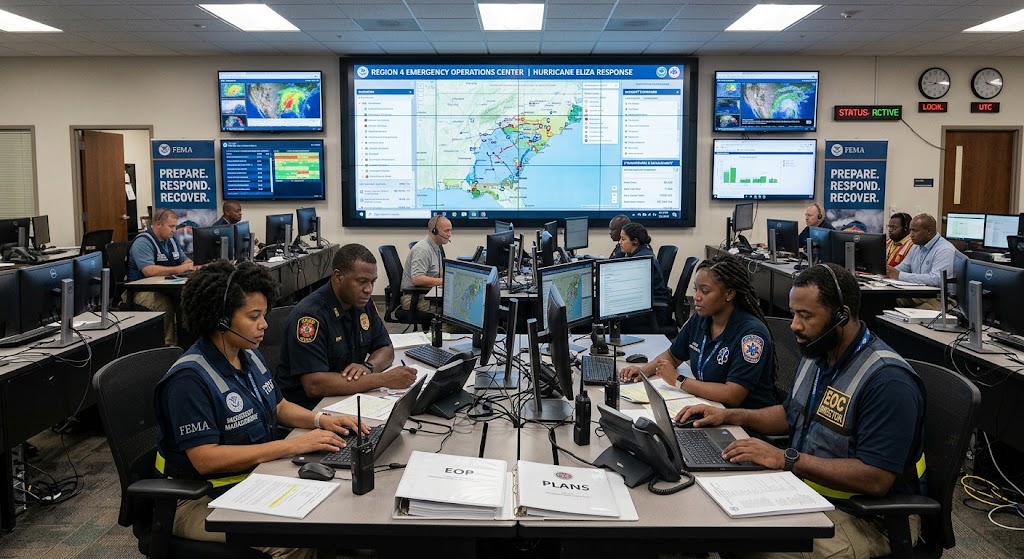
The Postgraduate Certificate in Emergency Preparedness and Management (PGCert) from Coventry University is a 60-credit, 100% online postgraduate qualification designed for professionals who need advanced knowledge and practical skills in emergency preparedness, risk management, crisis response and organisational resilience. The programme focuses on how organisations and communities can anticipate, prepare for, respond to and recover from emergencies, disasters and complex threats. Students develop capabilities in risk assessment, emergency planning, incident management, governance, multi-stakeholder communication, decision-making and resilience. The programme is particularly relevant to professionals working in government, emergency services, healthcare, NGOs, humanitarian organisations, security, critical infrastructure, military and other high-risk environments.
The qualification is awarded by Coventry University as part of the Coventry University Group. Coventry states that its online students receive the same qualification and access to many of the same academic and student-support benefits as campus students. The university also reports a 5 QS Stars rating for areas including teaching and employability and a Top 100 ranking globally for international outlook in the Times Higher Education World University Rankings 2025. Importantly for marketing purposes, the university's course page does not identify a specific professional-body accreditation for this particular PGCert; therefore, UpCaria should market it as a Coventry University postgraduate qualification, rather than claiming professional accreditation that is not specifically stated for this programme.
The programme is delivered 100% online and part-time over approximately two years, making it suitable for working professionals who want to study without leaving employment. The current course page lists January, May and September intakes, with January 2027 currently shown as the next start. The published tuition fee is £3,480 for the full 60-credit programme, although Coventry states that regionalised pricing and discounts may apply depending on the student's location. Students can pay by credit hour or through flexible instalments, including the option to pay per semester rather than paying the full fee upfront.
Entry Requirements
The published requirement is:
IELTS 6.5 overall
Minimum 5.5 in each component
Applicants who do not meet the requirement may be able to satisfy it through an approved pre-sessional English programme.
Documents Required
Coventry indicates that the application requires documentation relating to previous qualifications and experience. For UpCaria recruitment purposes, applicants should be prepared to provide:
Completed application form
Passport or government-issued identification
Undergraduate degree certificate
Academic transcripts
Evidence of relevant professional qualifications, where applicable
CV/resumé showing relevant professional experience
Evidence of English-language proficiency, where required
Additional supporting documentation requested by Coventry University based on the applicant's country and circumstances
Who is this course for?
This PGCert is particularly suitable for:
Emergency management professionals
Disaster management and resilience professionals
Emergency planners
Government emergency-management personnel
Civil protection and civil contingency professionals
Police, fire and emergency services personnel
Military and defence personnel
Healthcare and public-health professionals involved in emergency response
Humanitarian and NGO professionals
Security and crowd-safety professionals
Health and safety professionals
Critical infrastructure and utility professionals
Risk and crisis-management professionals
Professionals seeking to transition into emergency management
Coventry specifically identifies government emergency-management agencies, NGOs, civil society organisations, crowd safety, security management and health and safety as relevant professional environments.
Career Opportunities
Emergency Management Officer/Manager
Emergency Planning Officer
Disaster Risk Management Specialist
Business Continuity Manager
Crisis Management Specialist
Emergency Preparedness Coordinator
Risk Management Specialist
Humanitarian Response Officer/Manager
Resilience and Recovery Specialist
Emergency Services or Civil Contingencies Manager
Programme Highlights
This module develops the leadership and decision-making capabilities required during emergencies, crises and critical incidents. Students examine different interpretations of risk, non-technical skills, risk-minimisation techniques and leadership models applicable to crisis situations. Particular emphasis is placed on how leaders make decisions under pressure and within command-and-control environments. Students also examine how incidents can generate organisational learning and how leaders can overcome barriers to implementing lessons and change after an emergency.
This module focuses on the development of effective systems for preparing for, responding to and recovering from emergencies and disasters. Students explore how emergency and disaster plans are constructed, implemented, tested and evaluated across natural, social and technological hazards. The module also considers the organisational, institutional and legal frameworks influencing emergency planning, as well as the social and technological factors that shape preparedness at local, national and international levels.
This module examines how organisations coordinate their responsibilities and resources to create integrated emergency-management arrangements. Students analyse emergency-management theory, public policy, the role of government and the effectiveness of emergency-management practices. The module develops the ability to evaluate how different organisations and stakeholders work together before, during and after emergencies, with particular reference to integrated emergency-management approaches.
This module addresses organisational preparedness for increasingly complex, uncertain and dynamic risks. Students develop the ability to evaluate internal and external threats and determine appropriate business-continuity and crisis-management strategies. The emphasis is on developing more adaptive management practices and responsive governance systems so organisations can maintain critical functions and recover effectively when disruptive events occur.
Related Courses
Disaster Management and Resilience (PGCert)
Qualification: Postgraduate Certificate
Duration: 1 year
Tuition: £3,480
View ProgrammeCrisis and Organisational Resilience (PGCert)
Qualification: Postgraduate Certificate
Duration: 1 year
Tuition: £3,480
View ProgrammeEmergency and Incident Management (PGCert)
Qualification: Postgraduate Certificate
Duration: 1 year
Tuition: £3,480
View ProgrammeApply for This Programme
You need an UpCaria account before starting your application. Log in to your existing account or create a new one.
🎓 Scholarship Eligibility Checker
Select your country to check whether you may qualify for a scholarship for this programme.

