

Certified IT Risk Professional
Validated by Swiss School of Business and Management (SSBM)
Duration
4–6 weeks, depending on paceStudy Mode
OnlineTotal Tuition
€399Monthly Payment
—Qualification
Professional CertificateStart Date
Anytime – rolling enrollmentProgramme Overview
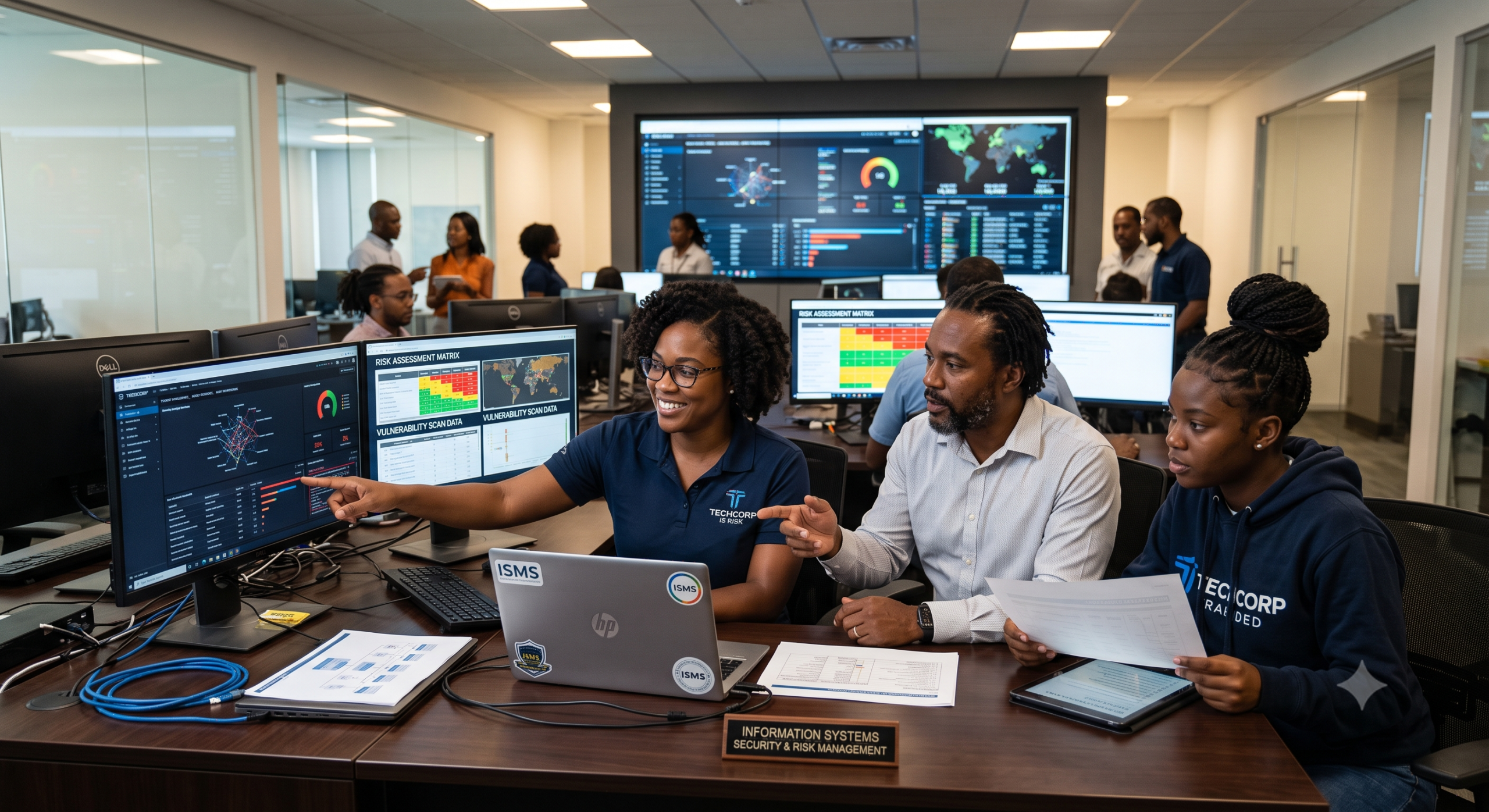
The Swiss School of Business and Management Geneva (SSBM Geneva) offers the Certified IT Risk Professional as a focused online professional certificate designed to develop practical capabilities in information security risk management. The program introduces learners to cybersecurity risk management, risk identification and modelling, qualitative and quantitative risk assessment, risk management frameworks, methodologies, tools, and security metrics. Delivered entirely online in English, the certificate can be completed in approximately 4–6 weeks, depending on the learner's pace, with approximately 7–10 hours of study per week and full lifetime access to the learning materials. Upon successful completion, learners receive a diploma from SSBM Geneva. SSBM's certificate portfolio is positioned within its broader Swiss-quality, internationally oriented education offering; SSBM also identifies its certificate-program collaboration with the Faculty of Economics & Business, University of Zagreb, which it describes as publicly recognized and accredited with AACSB and EPAS. Importantly, the Certified IT Risk Professional itself is presented by SSBM as a professional certificate awarded by SSBM Geneva, rather than as a separately accredited academic degree.
For Caribbean professionals, this certificate provides a practical and accessible pathway to strengthen technology-risk capabilities without leaving employment or relocating overseas. As Caribbean businesses, financial institutions, government agencies, telecommunications companies, healthcare organizations and other employers continue to expand their dependence on digital systems, professionals who can identify, assess, communicate and mitigate IT and information-security risks are increasingly valuable. The fully online format, English-language delivery, flexible pacing and no formal prerequisites make the program particularly suitable for Caribbean learners who want to add a globally oriented professional credential to their existing experience. The program can also complement careers in IT, cybersecurity, audit, compliance, banking, insurance, telecommunications, government and business management
Entry Requirements
There are no formal prerequisites for the Certified IT Risk Professional certificate. SSBM specifically states that the course is appropriate for individuals seeking professional development in IT risk management and for people who may already have on-the-job IT risk management experience, whether or not IT risk management is their formal job title.
For the application process, applicants should nevertheless be prepared to provide standard documents such as a professional résumé/CV, identification and relevant academic records where requested through SSBM's Student Application System.
Who is this course for?
This certificate is particularly suitable for:
IT professionals seeking to strengthen their risk-management capabilities
Cybersecurity and information-security professionals
IT managers and supervisors
Systems administrators and technology specialists
Internal and external audit professionals
Risk and compliance professionals
Banking and financial-services professionals
Insurance professionals
Telecommunications professionals
Government technology and digital-transformation personnel
Business professionals responsible for technology-related risk
Professionals seeking a career transition into IT risk and cybersecurity
Career Opportunities
Completion of the certificate can strengthen qualifications for roles such as:
IT Risk Analyst
Information Security Risk Analyst
Cybersecurity Risk Analyst
IT Risk Consultant
IT Governance, Risk & Compliance (GRC) Analyst
Information Security Analyst
IT Compliance Analyst
Technology Risk Specialist
IT Audit / Technology Audit Professional
Cybersecurity & Risk Management Coordinator
Programme Highlights
This module establishes the foundation for understanding cybersecurity risk within modern organizations. Learners are introduced to the relationship between information systems, cybersecurity threats and organizational risk, helping them understand why effective risk management is essential to protecting business operations, information assets and organizational objectives. For Caribbean professionals, this foundation is particularly relevant to organizations undergoing digital transformation and increasing their dependence on technology.
This module introduces learners to commonly used approaches, methodologies and tools for managing IT and information-security risk. The emphasis is on developing an understanding of how structured methodologies can support the identification, analysis and management of technology risks. This knowledge can be applied across sectors including banking, telecommunications, government, healthcare, insurance and private enterprise.
Risk assessment is central to effective IT risk management. This module examines the process of identifying and evaluating risks and introduces both qualitative and quantitative risk assessment methods. Learners develop the ability to assess the potential significance of identified risks and use structured approaches to support better organizational decisions.
This module focuses on the broader information-security risk management framework and its principal components. Learners develop an understanding of how risk management can be structured within an organization and how identified risks can be connected to business objectives, controls and mitigation strategies. The ability to view IT risk holistically is particularly valuable for professionals moving toward management, governance, risk and compliance responsibilities.
This module introduces the use of security metrics to support the monitoring and communication of cybersecurity and IT risk. Effective metrics can help organizations understand their risk position, evaluate performance and communicate technology-related concerns to decision-makers. The module supports the broader objective of helping professionals translate technical and information-security risks into meaningful business consequences.
Related Courses
Disaster Management and Resilience (PGCert)
Qualification: Postgraduate Certificate
Duration: 1 year
Tuition: £3,480
View ProgrammeEmergency Preparedness and Management (PGCert)
Qualification: Postgraduate Certificate
Duration: 1 year
Tuition: £3,480
View ProgrammeCrisis and Organisational Resilience (PGCert)
Qualification: Postgraduate Certificate
Duration: 1 year
Tuition: £3,480
View ProgrammeCertified Risk Professional
Validated by Swiss School of Business and Management (SSBM)
Duration
Approximately 4–6 weeks, depending on paceStudy Mode
OnlineTotal Tuition
€399Monthly Payment
€399Qualification
Professional CertificateStart Date
Anytime – rolling/open enrollmentProgramme Overview
The Certified Risk Professional is a focused, career-oriented online certificate offered by the Swiss School of Business and Management Geneva (SSBM Geneva), an international business school based in Geneva, Switzerland. The program is designed to develop practical competence in strategic risk management, giving learners the ability to identify, evaluate, quantify, prioritize, monitor and respond to business risks. SSBM Geneva is institutionally accredited by the British Accreditation Council (BAC), is EduQua certified, and holds ACBSP accreditation for selected degree programs; importantly, SSBM's website does not state that this particular certificate itself is ACBSP-accredited. The certificate is delivered completely online, in English, with flexible self-paced study and full lifetime access. For Caribbean professionals, this creates an attractive Swiss-focused professional development opportunity without the cost, travel or relocation requirements associated with studying overseas.
For Caribbean students and working professionals, this program is especially relevant because organizations across the region face increasingly complex risks involving financial uncertainty, cybersecurity, climate and natural disasters, supply chains, tourism, healthcare, infrastructure, regulation, project delivery and business continuity. The program's emphasis on strategic risk identification, assessment, mitigation and project risk management can therefore be applied across many Caribbean industries, from banking and insurance to government, tourism, construction, telecommunications and healthcare. With no formal entry requirements, a relatively short completion period, an online delivery model and a current tuition fee of €399, it provides an accessible way for Caribbean professionals to add a specialized international credential to their CV while continuing to work.
Entry Requirements
There are no formal prerequisites for the Certified Risk Professional program.
Recommended applicant profile
Although formal prerequisites are not required, the program is particularly well suited to people who:
Have some professional workplace experience.
Work in management, finance, operations, compliance, security, projects or administration.
Already have some exposure to risk management.
Want to transition into a risk-related role.
Want to strengthen their existing professional qualifications.
Are seeking an international professional credential.
Need a flexible program that can be completed while working.
SSBM specifically describes the certificate as suitable for individuals with on-the-job risk-management experience, whether or not risk management is their formal job title.
Who is this course for?
The Certified Risk Professional is particularly appropriate for Caribbean professionals working in or aspiring to work in:
Banking and financial services
Insurance
Government and public administration
Tourism and hospitality
Telecommunications
Information technology
Construction and infrastructure
Healthcare administration
Project management
Compliance and regulatory functions
Business operations
Security and business continuity
It is also suitable for entrepreneurs and managers who need to understand how to identify and manage threats that could affect the financial and operational performance of their organizations.
Career Opportunities
Risk Management Officer
Risk Analyst
Enterprise Risk Management Analyst
Compliance Officer
Operational Risk Analyst
Project Risk Manager / Project Risk Analyst
Business Continuity Specialist
Internal Controls Specialist
Corporate Governance & Risk Officer
Strategic Risk Consultant
Programme Highlights
This module establishes the foundation for understanding risk as a strategic business issue rather than simply an operational problem. Students are introduced to modern risk-management concepts and the characteristics of a risk-intelligent organization. For Caribbean professionals, this provides a useful framework for understanding how organizations can anticipate threats such as economic shocks, natural disasters, regulatory changes, supply-chain disruption and changing customer demand.
This module focuses on the processes and methodologies organizations use to manage risk systematically. Students explore how risks can be identified, evaluated, quantified, prioritized, responded to, monitored and reported. These skills are particularly valuable for Caribbean organizations that need structured approaches to managing financial, operational, technology, environmental and strategic risks.
Identifying the right risks—and determining which ones deserve the greatest attention—is central to effective risk management. This module develops students' understanding of risk identification and assessment techniques and helps them connect identified risks with their potential consequences for an organization. The knowledge can be applied to areas such as cybersecurity, insurance, banking, tourism, healthcare, construction and disaster preparedness.
This module connects risk management with broader organizational strategy. Students examine approaches for analyzing an organization's strategic position and developing strategies while considering potential risks. For Caribbean managers, this is particularly useful because organizations often have to make strategic decisions in small, highly interconnected economies where changes in tourism, international trade, climate conditions, currency movements or government policy can have significant effects.
Project risk management examines the risks that can affect projects from planning through implementation and completion. This is highly relevant to the Caribbean, where major projects in construction, tourism, infrastructure, energy, healthcare, technology and public-sector development must often operate within tight budgets and challenging environmental or logistical conditions. Students gain an understanding of why project risk management is an important component of an organization's broader strategic risk-management approach.
Related Courses
Disaster Management and Resilience (PGCert)
Qualification: Postgraduate Certificate
Duration: 1 year
Tuition: £3,480
View ProgrammeEmergency Preparedness and Management (PGCert)
Qualification: Postgraduate Certificate
Duration: 1 year
Tuition: £3,480
View ProgrammeCrisis and Organisational Resilience (PGCert)
Qualification: Postgraduate Certificate
Duration: 1 year
Tuition: £3,480
View ProgrammeMBA in Risk Management
Validated by London School of Business and Finance (LSBF)
Duration
24 MonthsStudy Mode
OnlineTotal Tuition
£9,500Monthly Payment
£396Qualification
MBA ProgrammeStart Date
January, April, July, OctoberProgramme Overview
The MBA in Risk Management from the London School of Business & Finance (LSBF) is a professionally focused online master's degree designed for ambitious professionals who want to develop expertise in identifying, assessing, and managing organizational risk while strengthening their strategic leadership capabilities. The programme combines a solid MBA foundation with specialist knowledge in corporate governance, ethics, and enterprise risk management, preparing graduates to make informed decisions in increasingly complex business environments. Delivered 100% online, the programme offers the flexibility required by working professionals while maintaining rigorous academic standards.
For students across the English-speaking Caribbean, this programme provides an excellent opportunity to earn an internationally recognized European MBA without relocating or interrupting their careers. Caribbean economies depend heavily on industries such as banking, insurance, tourism, healthcare, energy, logistics, government, and financial services—all sectors where effective risk management has become essential. The flexible online delivery allows professionals from Jamaica, Trinidad & Tobago, Barbados, Guyana, The Bahamas, Belize, the Eastern Caribbean, and other English-speaking territories to continue working while gaining advanced qualifications that enhance regional and international career prospects.
The curriculum emphasizes practical business leadership alongside specialized risk management competencies. Students develop expertise in strategic planning, governance, financial decision-making, operational management, compliance, and organizational resilience. Graduates leave with the knowledge required to help organizations anticipate uncertainty, strengthen governance frameworks, reduce operational risks, and support sustainable business growth in both private and public sector organizations.
Entry Requirements
Applicants should have ONE of the following:
Bachelor's degree in any discipline
ACCA
CIMA
Equivalent professional qualification
Applicants without a degree may be considered through the Mature Entry Route by providing:
Minimum three years of managerial work experience
Academic transcripts or certificates for highest qualifications achieved
Application assessed individually by the LSBF Academic Admissions Board.
Required Application Documents
Applicants should prepare:
Completed application form
Passport or government-issued identification
Academic transcripts
Degree certificate (or highest qualification)
Professional qualification certificates (where applicable)
Updated CV/Resume
Supporting employment documentation for Mature Entry applicants
Any additional documents requested during admissions review.
Who is this course for?
This MBA is ideal for:
Business managers
Risk professionals
Financial services professionals
Compliance officers
Banking professionals
Insurance managers
Operations managers
Government administrators
Corporate executives
Entrepreneurs
Project managers
Professionals seeking promotion into executive leadership positions
Graduates wishing to specialize in enterprise risk management and corporate governance.
Career Opportunities
Enterprise Risk Manager
Corporate Risk Consultant
Chief Risk Officer (CRO)
Governance and Compliance Manager
Internal Audit Manager
Operational Risk Manager
Financial Risk Analyst
Business Continuity Manager
Corporate Strategy Manager
Senior Management Consultant
Programme Highlights
Students develop an understanding of modern marketing strategy, customer behavior, competitive positioning, global business environments, and organizational decision-making. The module explores how organizations identify market opportunities and create sustainable competitive advantages while responding to changing economic conditions.
This module equips students with practical financial management skills including financial reporting, budgeting, investment appraisal, performance measurement, cost management, and financial decision-making. Students learn how financial information supports strategic business planning and organizational growth.
Students examine operational excellence, business processes, supply chain management, quality improvement, technology integration, productivity enhancement, and operational efficiency. Emphasis is placed on improving organizational performance through effective operational leadership.
This module focuses on strategic planning, organizational leadership, innovation, competitive strategy, change management, organizational culture, and executive decision-making. Students learn how senior leaders formulate and implement successful business strategies.
Students gain comprehensive knowledge of governance frameworks, board responsibilities, accountability, ethical leadership, corporate transparency, regulatory compliance, stakeholder management, and responsible business practices. The module prepares graduates to promote ethical decision-making and strengthen organizational governance.
This specialist module examines enterprise-wide risk identification, risk assessment methodologies, mitigation strategies, operational resilience, regulatory risk, financial risk, strategic risk, and business continuity planning. Students learn to design comprehensive risk management systems that support organizational sustainability and long-term success.
The final capstone project allows students to apply the knowledge gained throughout the MBA to solve a real business challenge. Students conduct independent research, analyze organizational problems, evaluate strategic alternatives, and produce evidence-based recommendations that demonstrate advanced managerial competence and professional consulting skills.
Related Courses
Economics for Managers (Short Course)
Qualification: Micro-Credentials / Short Courses
Duration: 13 weeks
Tuition: £1,543
View ProgrammeDiversity Management in a Global Economy (Short Course)
Qualification: Micro-Credentials / Short Courses
Duration: 13 weeks
Tuition: £1,543
View ProgrammeGlobal Resource and Talent Management (Short Course)
Qualification: Micro-Credentials / Short Courses
Duration: 13 weeks
Tuition: £1,543
View ProgrammeApply for This Programme
You need an UpCaria account before starting your application. Log in to your existing account or create a new one.
🎓 Scholarship Eligibility Checker
Select your country to check whether you may qualify for a scholarship for this programme.