

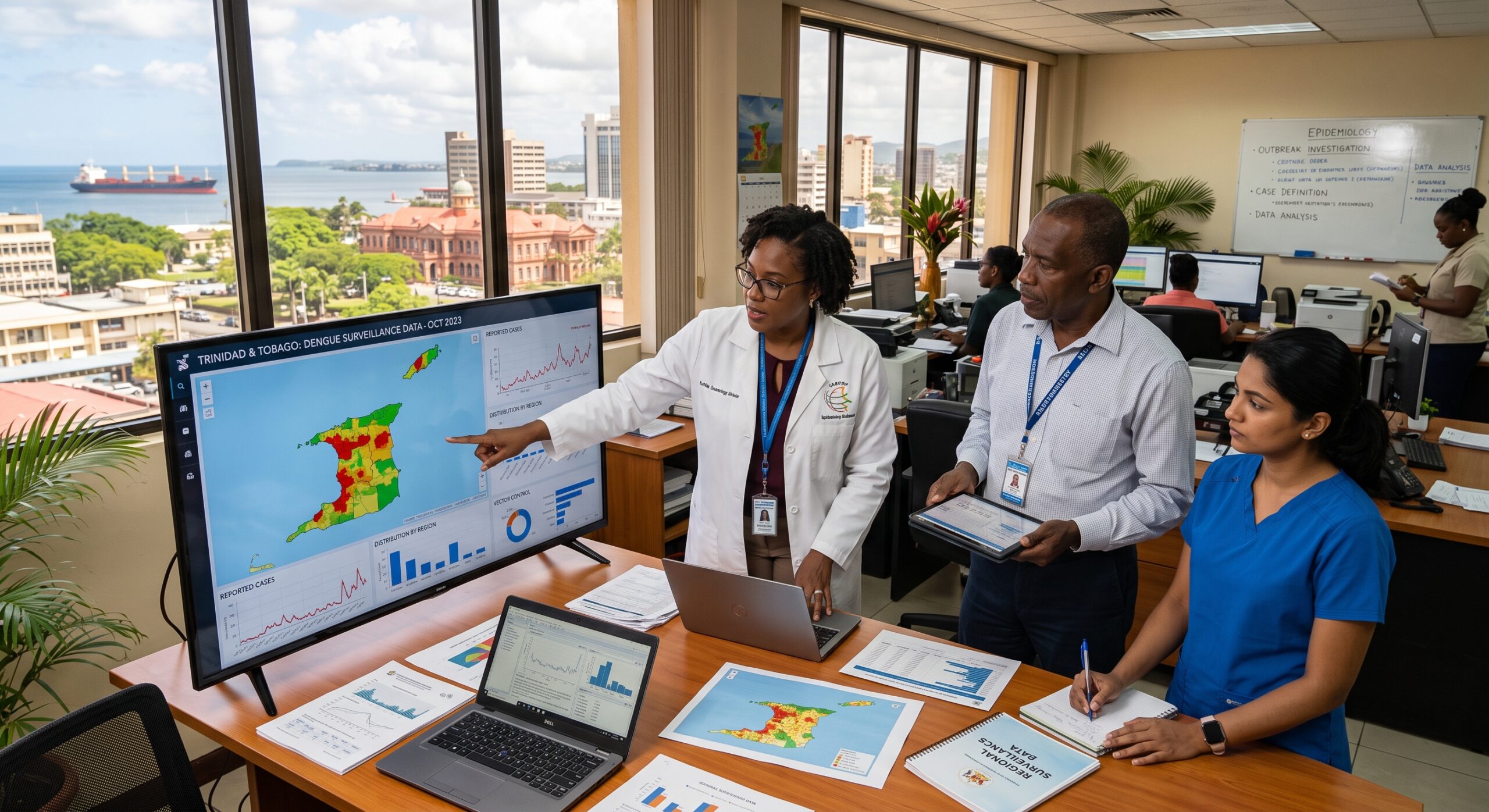
Epidemiology
Validated by University of Essex Online
Duration
13 weeksStudy Mode
OnlineTotal Tuition
£1,543Monthly Payment
£1,515Qualification
Micro-Credentials / Short CoursesStart Date
January March May July OctoberProgramme Overview
The University of Essex Online Epidemiology Professional Course offers an excellent opportunity to develop practical knowledge of how diseases emerge, spread and can be controlled, while learning how epidemiological evidence can inform public-health decision-making. The course is awarded by the University of Essex, a UK university established under Royal Charter and registered with the UK Office for Students as a provider with degree-awarding powers. The Epidemiology course itself is CPD-certified by The CPD Certification Service, an independent accreditation recognised in more than 100 countries. Students explore disease causation, epidemiological and statistical concepts, surveillance data, research methods and approaches to protecting public health. The course is delivered 100% online and part-time, making it particularly attractive to professionals who want to strengthen their public-health expertise without leaving employment.
For Caribbean students, this programme offers a practical and accessible way to build skills that can contribute directly to stronger public-health systems across the region. Caribbean countries regularly need professionals who can understand disease patterns, interpret health data, assess risk and support evidence-based interventions, particularly in areas such as infectious diseases, chronic diseases, environmental health and public-health surveillance. The online format means students can remain in Jamaica, Trinidad and Tobago, Barbados, Guyana, the Bahamas, Saint Lucia or other Caribbean countries while studying with a UK university. The programme also provides a useful stepping stone for healthcare and public-health professionals who want to progress toward further postgraduate study in areas such as Public Health, Infection Control or Global Mental Health and Wellbeing.
Entry Requirements
One of the strongest features of this course is its accessible entry requirement:
No formal academic qualifications are required.
No prior professional experience is required.
A high level of English proficiency is required because teaching is conducted in English.
Where English is not the applicant's first language, the expected level is equivalent to IELTS Academic 6.5.
Applicants who do not have IELTS or an equivalent qualification can take the University's free online English test.
Places are limited, so applicants are encouraged to apply early for their preferred start date.
Who is this course for?
This course can be particularly valuable for:
Public-health professionals
Nurses and other healthcare professionals
Medical and allied-health professionals
Health promotion practitioners
Community health workers
Healthcare administrators and managers
Laboratory and biomedical professionals
Government and public-sector health employees
NGO and development-sector professionals working in health
Professionals seeking an introduction to epidemiology before pursuing postgraduate public-health study
Career Opportunities
Public Health Officer
Epidemiology Assistant
Public Health Research Assistant
Disease Surveillance Officer
Health Data Analyst
Community Health Programme Officer
Health Promotion Officer
Research Coordinator
Infection Prevention and Control Support Specialist
Public Health Programme Coordinator
Programme Highlights
Students begin by developing an understanding of the evolution of epidemiology and how the discipline is applied today. This provides important context for understanding how epidemiologists investigate patterns of disease, identify risk factors and contribute to public-health decision-making. For Caribbean professionals, this foundation can help connect historical approaches to modern challenges involving infectious diseases, chronic diseases and population health.
This area introduces fundamental measures used to understand disease within populations. Students examine concepts such as prevalence and incidence, which are essential for determining how widespread a condition is and how frequently new cases occur. These measures are particularly useful for interpreting health statistics and evaluating the burden of disease within Caribbean communities.
Students develop an understanding of how statistical information can be organised, summarised and interpreted. Descriptive statistics provide the foundation for communicating health trends and identifying meaningful patterns in population data. These skills can be valuable for professionals involved in health reporting, programme monitoring and community-health planning.
This study area introduces methods used to draw conclusions from research data. Students explore concepts including confidence intervals, p-values and hypothesis testing, helping them understand how researchers determine whether observed findings are likely to represent meaningful relationships rather than random variation.
Students explore important analytical tools used to examine relationships between exposure and health outcomes. Odds ratios and relative risk are widely used in epidemiological research to assess associations, while simple regression provides an introduction to analysing relationships between variables. These skills can strengthen a student's ability to interpret published health research and evidence.
Effective epidemiological research depends on obtaining appropriate samples and determining whether a study has enough participants to produce useful findings. Students examine sampling principles and sample-size calculation, developing an appreciation of how research studies can be designed to generate reliable and meaningful results.
Students investigate observational research approaches and the importance of standardisation when comparing health outcomes across different populations. This is especially relevant when examining disease patterns across communities, age groups or geographic areas and can support more accurate interpretation of Caribbean health data.
Ethical practice is fundamental to health research. Students consider ethical issues associated with epidemiological research while examining the types and sources of data available to researchers. This helps future health professionals appreciate the importance of responsible data use, confidentiality, research integrity and protecting individuals and communities.
This area introduces students to studies designed to evaluate interventions and to methods for reviewing research evidence. Understanding how interventions are assessed can help professionals determine whether particular public-health strategies are supported by evidence and whether they are appropriate for specific populations.
Students develop the ability to critically assess research rather than simply accept published findings at face value. Critical appraisal is an important professional skill because healthcare and public-health decisions increasingly depend on the quality and reliability of available evidence.
Global surveillance examines how health information can be monitored to identify emerging patterns and threats. This is particularly relevant to the Caribbean, where effective surveillance can support early identification of infectious-disease outbreaks and other public-health risks. The knowledge gained can be valuable for professionals working across national, regional and international health systems.
The course also considers the relationship between epidemiology and social media, reflecting the growing role of digital communication in public health. Students can develop a better understanding of how health information, public perceptions and disease-related communication interact in the digital environment—an increasingly important consideration for health agencies and professionals.
Related Courses
Introduction to Global Mental Health and Wellbeing (Short Course)
Qualification: Micro-Credentials / Short Courses
Duration: 13 weeks
Tuition: £1,543
View ProgrammeMental Health over the Life Course (Short Course)
Qualification: Micro-Credentials / Short Courses
Duration: 13 weeks
Tuition: £1,543
View ProgrammeHealthcare Management: Principles and Practices (Short Course)
Qualification: Micro-Credentials / Short Courses
Duration: 13 weeks
Tuition: £1,543
View ProgrammeApply for This Programme
You need an UpCaria account before starting your application. Log in to your existing account or create a new one.
🎓 Scholarship Eligibility Checker
Select your country to check whether you may qualify for a scholarship for this programme.