

Bachelor’s Degree in Computer Hardware Engineering and Networking
Validated by International European University
Duration
4 yearsStudy Mode
OnlineTotal Tuition
€17,400Monthly Payment
Please request further information to get a breakdown of the tuition payment optionsQualification
Bachelor’s DegreeStart Date
February OctoberProgramme Overview
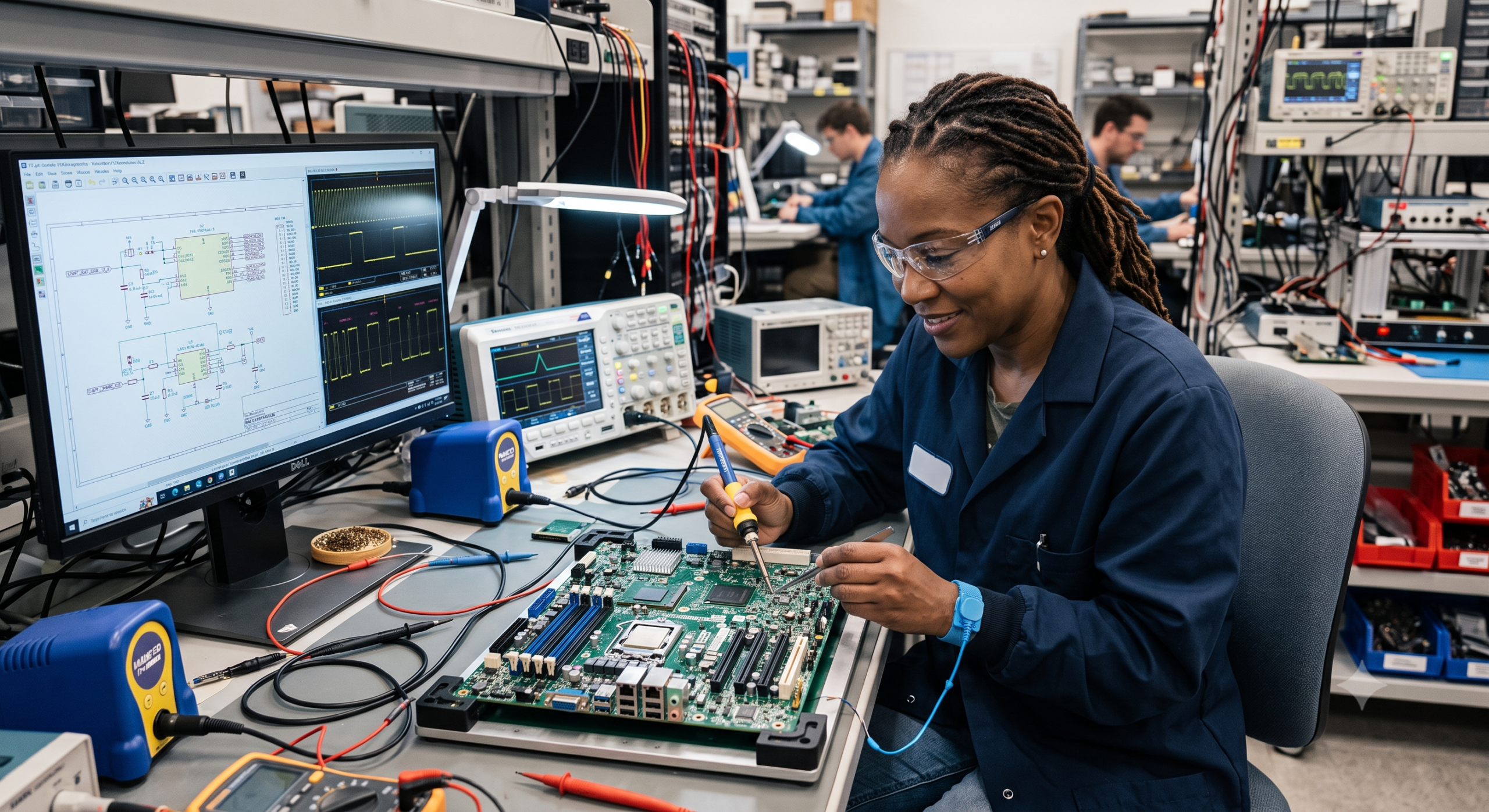
The Online Bachelor’s Degree in Computer Hardware Engineering and Networking from European International University is designed for students who want to build expertise in the physical and digital foundations of modern computing systems. The program focuses on computer hardware architecture, networking technologies, systems administration, cybersecurity fundamentals, and the integration of hardware and software solutions. For Caribbean students, this degree represents an opportunity to gain internationally oriented technology skills without relocating overseas, allowing learners to continue working or managing personal commitments while earning a European degree. With the Caribbean region experiencing increasing demand for IT professionals in telecommunications, banking, government technology, cybersecurity, cloud services, and digital transformation, graduates can position themselves for high-growth technology careers locally and globally.
European International University is attractive to Caribbean learners because of its international approach, flexible online learning model, and focus on career-oriented education. The program provides students with practical knowledge needed to design, install, maintain, and troubleshoot computer systems and networks. Key benefits include flexible study from anywhere in the Caribbean, exposure to European higher education standards, development of technical and problem-solving skills, and preparation for careers in a technology-driven economy. The program is especially valuable for students from Jamaica, Trinidad and Tobago, Barbados, Guyana, Belize, Saint Lucia, Grenada, and other English-speaking Caribbean countries who want a technology degree that aligns with regional workforce needs while gaining international academic exposure.
The Bachelor’s in Computer Hardware Engineering and Networking is ideal for individuals interested in becoming technology specialists, including recent secondary school graduates, IT support professionals seeking advancement, telecommunications employees, network technicians, entrepreneurs building technology businesses, and professionals transitioning into information technology careers. The degree develops the foundation required to manage modern computing infrastructure, including enterprise networks, hardware systems, servers, and connected devices. Students graduate with knowledge applicable across industries such as finance, healthcare, education, government, telecommunications, and technology services.
Tuition Breakdown
Tuition fees and payment schedules may be subject to change. Contact UpCaria to confirm the latest information.
Entry Requirements
Entry Requirements (Caribbean Applicants)
Applicants typically need:
Completed secondary/high school education or equivalent qualification.
Academic transcripts or school certificates.
Copy of passport or government-issued identification.
Completed online application form.
Passport-size photograph.
Proof of English proficiency where required.
Additional academic documents may be requested depending on the applicant’s educational background.
Recommended Caribbean documents:
CSEC/CAPE certificates (Jamaica, Trinidad & Tobago, Barbados, Guyana, etc.).
High school transcript.
Previous college/university transcripts (for transfer applicants).
Resume/CV (recommended for working professionals).
Personal statement or motivation letter (recommended).
Who is this course for?
This program is designed for:
High school graduates interested in technology careers.
IT support technicians seeking a bachelor’s qualification.
Network administrators wanting career advancement.
Telecommunications professionals.
Computer repair specialists.
Entrepreneurs interested in technology businesses.
Professionals moving into IT from other fields.
Students seeking an international online technology degree.
Career Opportunities
Network Administrator
Computer Hardware Engineer
IT Support Specialist
Systems Administrator
Network Engineer
Cybersecurity Analyst
Cloud Infrastructure Technician
Telecommunications Specialist
Data Center Technician
IT Infrastructure Consultant
Programme Highlights
This module introduces students to the fundamental components of computing systems, including processors, memory, storage devices, motherboards, and peripheral technologies. Students learn how hardware components interact and how computer systems are designed, assembled, and maintained.
Students explore the internal structure of computers, including CPU design, instruction processing, memory systems, and system performance. This module provides the foundation needed to understand how modern computing devices operate.
This course introduces digital circuits, binary systems, logic gates, and electronic components used in computer hardware. Students develop an understanding of the electronic foundations behind computers and embedded systems.
Students learn how operating systems manage hardware resources, applications, users, and security. Topics include Windows/Linux environments, system configuration, and basic administration.
This module develops knowledge of networking concepts including LANs, WANs, network protocols, IP addressing, routers, switches, and network troubleshooting.
Students learn how to design, configure, and maintain business networks. The course covers infrastructure planning, network performance, reliability, and administration practices.
This course introduces security principles, threats, vulnerabilities, authentication, encryption, and defensive strategies used to protect computer systems and networks.
Students gain knowledge of server management, virtualization, cloud infrastructure, and modern IT environments used by organizations worldwide.
This module introduces database concepts, data management, storage, and basic database administration skills needed for technology professionals.
Students develop foundational programming skills and learn how software interacts with hardware systems. The module supports problem-solving and automation skills.
Students explore connected devices, sensors, microcontrollers, and IoT applications that combine hardware, software, and networking technologies.
Students apply their knowledge by completing a practical technology project involving hardware systems, networking, cybersecurity, or infrastructure solutions.
Related Courses
Strategic Management Professional Certificate
Qualification: Professional Certificate
Duration: 8 weeks, depending on pace
Tuition: €399
View ProgrammeCertified Project Manager (CPM)
Qualification: Professional Certificate
Duration: 4–6 weeks
Tuition: €399
View ProgrammePostgraduate Level 7 Diploma in Strategic Management and Leadership
Qualification: Postgraduate Diploma
Duration: 7-10 weeks
Tuition: €2,000
View ProgrammeApply for This Programme
You need an UpCaria account before starting your application. Log in to your existing account or create a new one.
🎓 Scholarship Eligibility Checker
Select your country to check whether you may qualify for a scholarship for this programme.