

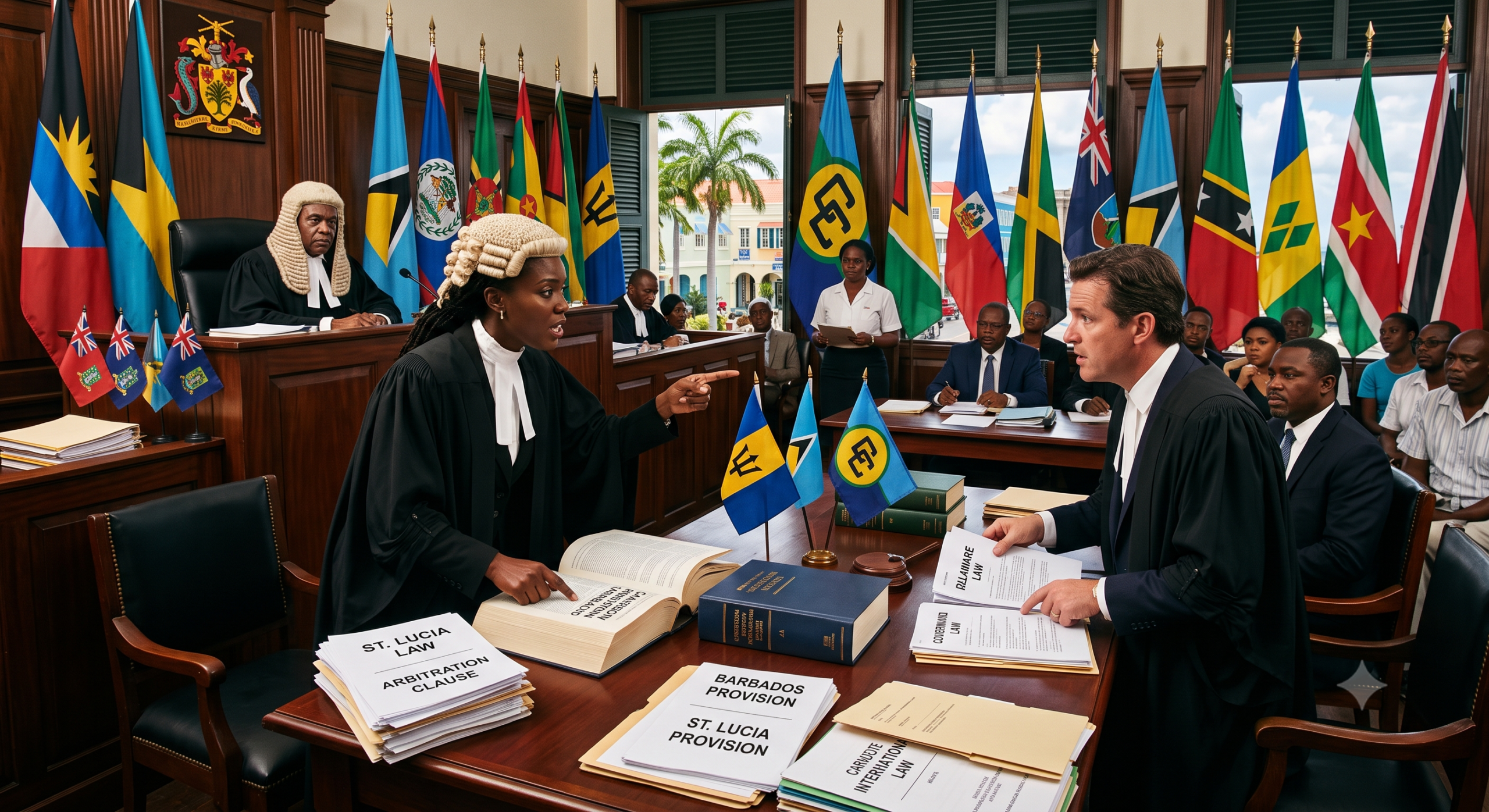
Commercial Conflict of Laws
Validated by University of Essex Online
Duration
13 weekStudy Mode
OnlineTotal Tuition
£1,543Monthly Payment
£514Qualification
Micro-Credentials / Short CoursesStart Date
July OctoberProgramme Overview
The Commercial Conflict of Laws online professional course from the University of Essex Online is a 13-week, part-time postgraduate-level programme designed for professionals who want to understand the legal principles governing cross-border commercial transactions and international disputes. Students develop a strong foundation in private international law, learning how courts determine jurisdiction, applicable law, and the recognition and enforcement of foreign judgments. The programme is delivered 100% online, allowing working professionals throughout the Caribbean to study without interrupting their careers. Upon successful completion, students earn 20 postgraduate academic credits, which can be transferred toward selected postgraduate law qualifications, including the Postgraduate Certificate (PG Cert), Postgraduate Diploma (PG Dip), or LLM in International Business Law.
Entry Requirements
Open to graduates, legal professionals, and experienced practitioners seeking specialist knowledge in international commercial law.
Applicants are expected to have a good standard of English language proficiency.
Applicants whose first language is not English should demonstrate English language proficiency equivalent to IELTS Academic 6.5.
Applicants who do not hold an IELTS qualification may complete the University of Essex Online English language assessment during the admissions process.
The programme welcomes applicants from a wide range of academic and professional backgrounds, making it suitable for both established professionals looking to enhance their expertise and individuals seeking to develop specialist knowledge in commercial conflict of laws.
Who is this course for?
Attorneys-at-Law
Corporate Legal Advisers
Compliance Officers
Financial Services Professionals
International Business Managers
Import and Export Professionals
Government Legal Officers
Public Sector Administrators
Business Owners engaged in international trade
Caribbean professionals preparing for postgraduate legal study or an LLM
Career Opportunities
International Business Lawyer
Commercial Litigation Specialist
Corporate Legal Adviser
Compliance Manager
International Trade Consultant
Risk and Regulatory Compliance Officer
International Contracts Manager
Government Legal Policy Officer
Arbitration and Dispute Resolution Specialist
International Business Development Manager
Programme Highlights
Students begin by exploring the principles of private international law and how legal systems interact when commercial disputes involve parties from different countries. This module provides the foundation for understanding jurisdictional issues and the legal framework governing international business relationships.
This module examines how courts determine whether they have authority to hear international commercial disputes. Students learn the legal principles governing jurisdiction and how businesses can strategically manage legal risks when operating across multiple countries.
Students explore the European legal framework governing jurisdiction and the recognition of judgments between participating states. Although legal developments such as Brexit have influenced this area, understanding these regulations remains essential for anyone involved in international commercial practice.
This module explains how courts determine which country's legal system applies to international contracts and commercial disputes. Students gain practical knowledge of the legal principles used to resolve conflicts between competing jurisdictions.
Students study the legal framework governing contractual obligations across international borders, including party autonomy, mandatory rules, and the determination of applicable law for commercial contracts.
This topic focuses on non-contractual obligations, including negligence, product liability, unfair competition, and other international tort claims. Students learn how courts determine liability when disputes arise across different legal systems.
Students gain an understanding of procedural issues involved in international litigation, including service of legal documents, gathering evidence abroad, and cooperation between different judicial systems.
One of the programme's most practical modules, this section teaches students how court judgments obtained in one country can be recognised and enforced in another jurisdiction. This knowledge is particularly valuable for international trade, finance, and cross-border commercial transactions.
The programme concludes by examining international treaties, conventions, and organizations that support cooperation between legal systems and facilitate international commerce.
Students examine specialised commercial contracts commonly used in international business, including agency agreements, distribution contracts, insurance arrangements, and transportation agreements. The module highlights the legal issues unique to these contractual relationships.
This module explores how contractual rights, ownership interests, and secured transactions operate across different jurisdictions. Students develop an understanding of legal risk management in international commerce.
Students compare the approaches taken by the United Kingdom and the United States when resolving international commercial disputes. This comparative perspective broadens students' understanding of global legal practice.
Related Courses
Crowded Places and Public Safety Management PGCert
Qualification: Postgraduate Certificate
Duration: 1 Year
Tuition: £3,480
View ProgrammeMaster in International Fashion Law in the Digital Age
Qualification: Master’s Degree (MSc / MA / MPH)
Duration: 1 year
Tuition: €2,500
View ProgrammeLLM International Business Law
Qualification: Master’s Degree (MSc / MA / MPH)
Duration: 24 months
Tuition: £13,427
View ProgrammeApply for This Programme
You need an UpCaria account before starting your application. Log in to your existing account or create a new one.
🎓 Scholarship Eligibility Checker
Select your country to check whether you may qualify for a scholarship for this programme.