

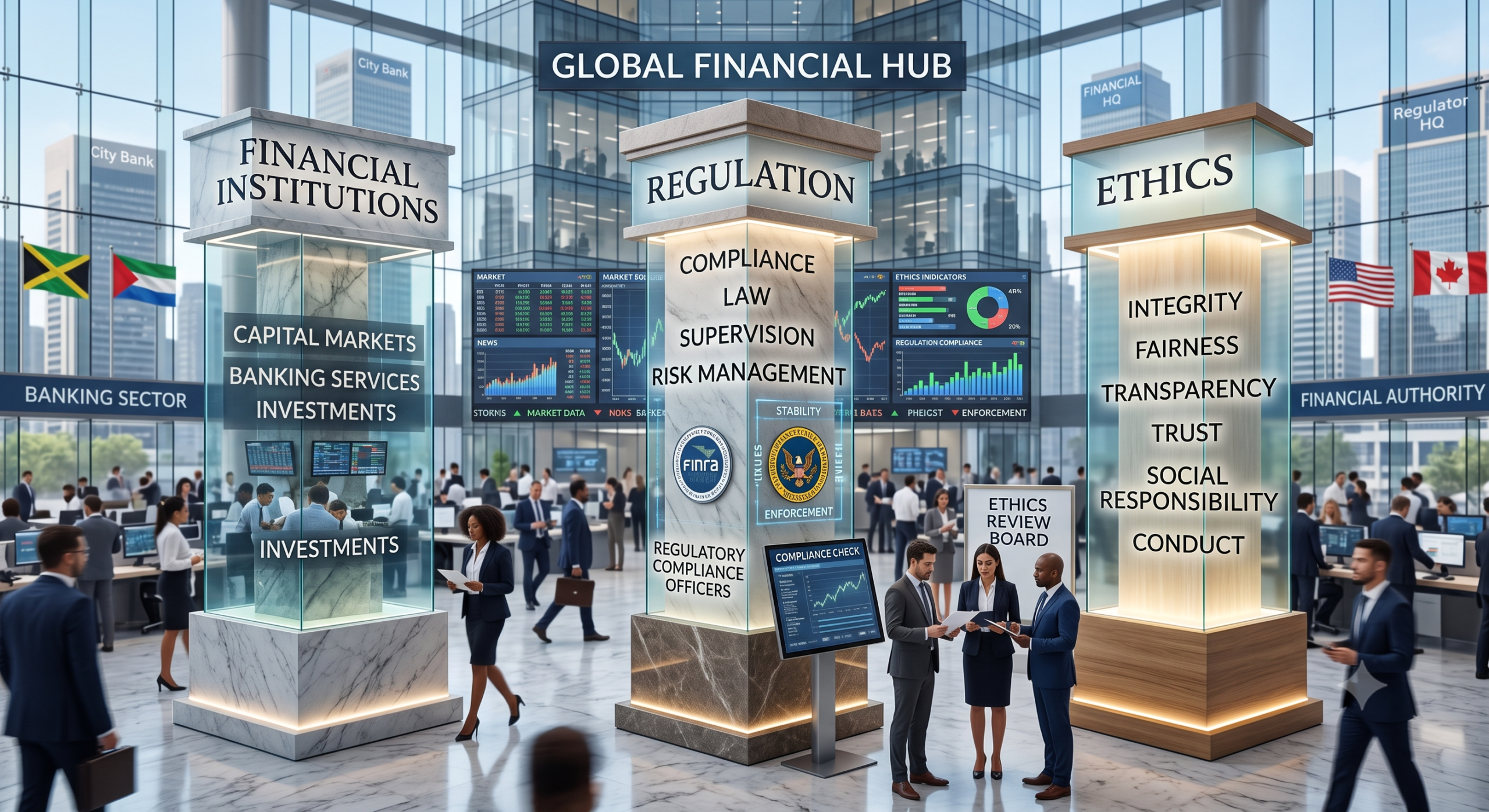
Financial Institutions, Regulation, and Ethics
Validated by University of Liverpool Online
Duration
10 weeksStudy Mode
OnlineTotal Tuition
£1,495Monthly Payment
£748Qualification
Micro-Credentials / Short CoursesStart Date
July September NovemberProgramme Overview
The Financial Institutions, Regulation and Ethics online professional development course from the University of Liverpool is a 10-week, part-time Level 7 postgraduate microcredential designed for professionals who want to develop a comprehensive understanding of the modern financial services industry. The programme examines how financial institutions operate, how financial markets are regulated, and why ethics, governance, and sustainability are essential to maintaining trust and stability within global financial systems. Students also explore Environmental, Social and Governance (ESG) principles, financial crises, credit rating agencies, behavioural finance, and professional ethical standards. For professionals across the Caribbean, where banking, insurance, investment management, fintech, and regulatory compliance continue to evolve, this programme provides practical knowledge that can enhance career progression within both private and public sector financial institutions.
Entry Requirements
Applicants are not required to have previous academic qualifications or professional work experience to enroll in this professional development course. However, applicants must demonstrate English language proficiency equivalent to an IELTS Academic score of 6.5. Those without an IELTS certificate may complete the University's free online English assessment. Applicants from qualifying English-speaking countries may be exempt from this requirement.
Who is this course for?
This programme is particularly suitable for:
Banking professionals
Credit analysts
Investment advisors
Financial services managers
Insurance professionals
Compliance officers
Risk management specialists
Financial regulators
Central bank employees
Finance graduates seeking specialist knowledge
Public sector finance professionals
Individuals preparing for postgraduate finance studies
For Caribbean professionals working in commercial banks, credit unions, securities firms, insurance companies, ministries of finance, or financial regulatory agencies, this programme provides valuable insight into international best practices and ethical decision-making.
Career Opportunities
Financial Analyst
Banking Officer
Investment Analyst
Compliance Officer
Risk Management Officer
Financial Services Consultant
Regulatory Affairs Officer
Corporate Governance Specialist
Credit Risk Analyst
Financial Crime and AML Compliance Officer
Programme Highlights
Students gain an understanding of how commercial banks, investment banks, insurance companies, pension funds, mutual funds, and other financial institutions support economic development and facilitate the efficient movement of capital. The module also explores how these institutions interact with governments, businesses, and consumers while maintaining financial stability.
This module examines the factors that influence interest rates within domestic and international financial markets. Students explore monetary policy, inflation, central banking, market expectations, and macroeconomic conditions while understanding how interest rate movements affect borrowing, investment decisions, mortgages, business financing, and economic growth.
Students learn how bond markets function and how governments and corporations raise capital through debt securities. The module also investigates the role of credit rating agencies and the ethical challenges associated with ratings, conflicts of interest, transparency, and investor confidence, particularly following the Global Financial Crisis.
This module introduces equity markets and the relationship between investment risk and expected returns. Students learn how investors evaluate shares, diversify portfolios, and make investment decisions while balancing profitability against market uncertainty.
Students explore competing theories about how financial markets operate. Topics include market efficiency, investor psychology, behavioural biases, irrational market behaviour, insider trading regulations, and how human decision-making influences asset prices.
This module explains how companies raise capital through Initial Public Offerings (IPOs) and secondary offerings while examining ethical considerations surrounding disclosure, investor protection, market manipulation, and corporate transparency.
Students study internationally recognised ethical principles developed by the CFA Institute. The module emphasizes integrity, professionalism, client confidentiality, fiduciary responsibility, conflicts of interest, and maintaining public confidence within financial markets.
The final module evaluates the lessons learned from major financial crises, particularly the 2008 Global Financial Crisis. Students examine regulatory reforms, systemic risk management, capital adequacy requirements, international banking regulations, and the growing importance of ESG and sustainable finance in today's financial environment.
Related Courses
Economics for Managers (Short Course)
Qualification: Micro-Credentials / Short Courses
Duration: 13 weeks
Tuition: £1,543
View ProgrammeDiversity Management in a Global Economy (Short Course)
Qualification: Micro-Credentials / Short Courses
Duration: 13 weeks
Tuition: £1,543
View ProgrammeGlobal Resource and Talent Management (Short Course)
Qualification: Micro-Credentials / Short Courses
Duration: 13 weeks
Tuition: £1,543
View ProgrammeApply for This Programme
You need an UpCaria account before starting your application. Log in to your existing account or create a new one.
🎓 Scholarship Eligibility Checker
Select your country to check whether you may qualify for a scholarship for this programme.