

Practical Psychology for Policing
Validated by University of Essex Online
Duration
13 weeksStudy Mode
OnlineTotal Tuition
£1,492Monthly Payment
£498Qualification
Micro-Credentials / Short CoursesStart Date
July, OctoberProgramme Overview
The Practical Psychology for Policing online professional course from the University of Essex Online is a 13-week, part-time programme designed to demonstrate how psychological science can enhance modern policing and criminal justice practice. The course examines the relationship between psychology and policing, equipping learners with an understanding of police decision-making, investigative interviewing, offender behaviour, criminal careers, and evidence-based policing strategies. Students develop practical insights into how psychological principles can improve crime prevention, investigations, community engagement, and operational policing. For professionals across the Caribbean, where law enforcement agencies continue to modernize and strengthen community policing initiatives, this course offers valuable knowledge that can immediately be applied within policing, security, corrections, and wider criminal justice environments.
Entry Requirements
There are no formal academic qualifications or previous policing experience required.
Applicants should have:
An interest in policing, psychology, criminology, or criminal justice.
A high level of English proficiency.
If English is not their first language, English ability equivalent to IELTS Academic 6.5 (or successful completion of the University's free English assessment).
This makes the programme highly accessible to professionals and aspiring practitioners throughout the Caribbean.
Who is this course for?
This programme is ideal for:
Police officers
Detectives and investigators
Military police personnel
Customs and border security officers
Correctional officers
Intelligence analysts
Community policing practitioners
Crime prevention specialists
Security professionals
Students interested in criminology or criminal psychology
Graduates considering postgraduate study in policing or criminal justice
Public sector professionals involved in law enforcement policy
Career Opportunities
Police Officer
Criminal Investigator
Detective
Intelligence Analyst
Crime Prevention Officer
Community Policing Coordinator
Correctional Services Officer
Security Risk Analyst
Border and Customs Enforcement Officer
Criminal Justice Researcher
Programme Highlights
This module develops one of the most critical skills in policing—conducting effective interviews with victims, witnesses, and suspects. Students learn how memory, communication, cognitive bias, and questioning techniques influence the quality of evidence collected, helping to improve investigations while reducing the risk of false confessions and miscarriages of justice.
Police officers make high-pressure decisions every day. This module explores how stress, perception, cognitive biases, heuristics, and risk assessment affect judgement. Learners discover evidence-based strategies for improving decision-making, enhancing officer safety, accountability, and operational effectiveness.
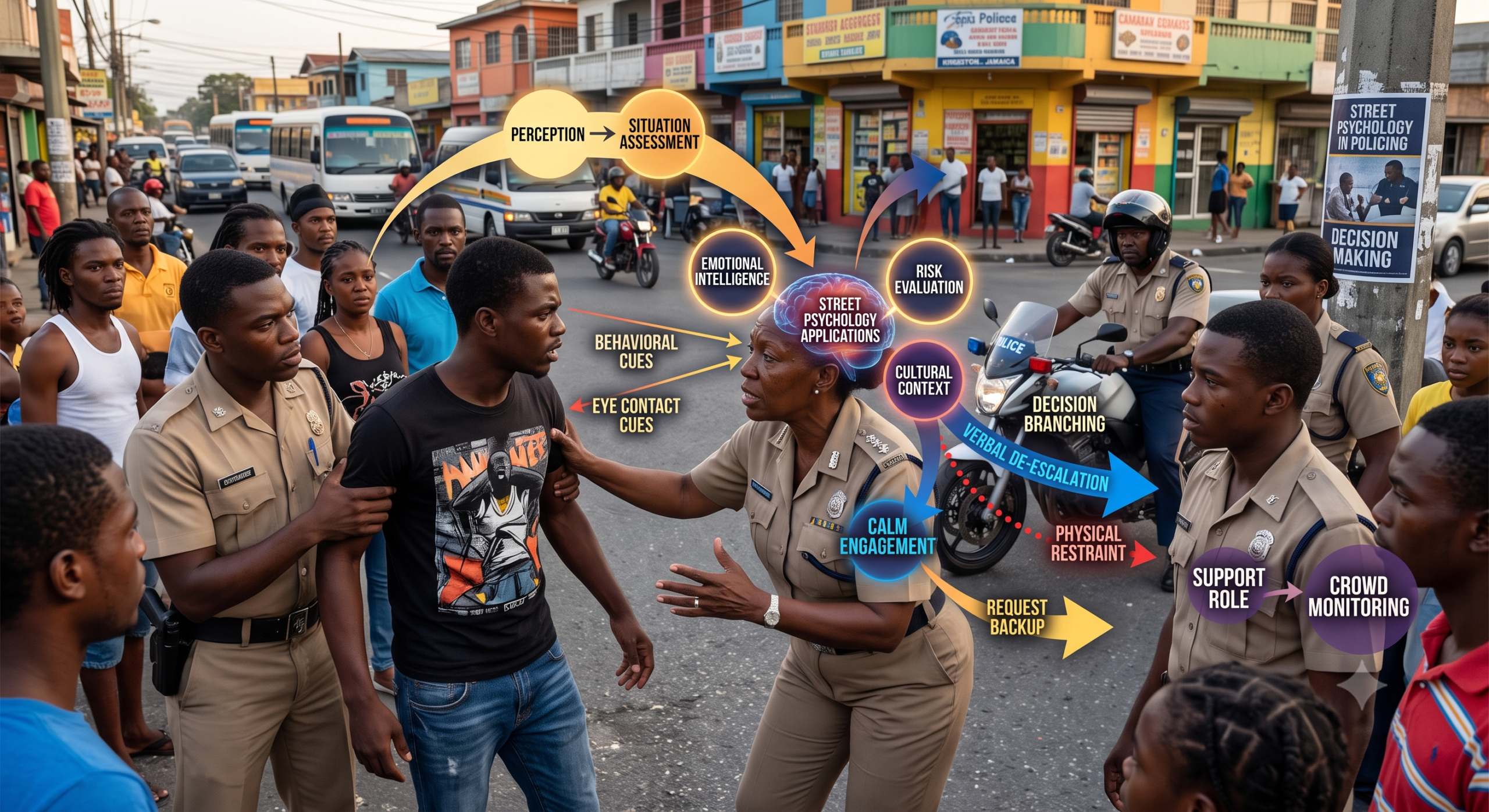
Successful policing depends on understanding human behaviour in real-world situations. This module teaches students how to recognise behavioural cues, build rapport, de-escalate conflict, improve communication, and strengthen community engagement, making it particularly valuable for frontline officers and community policing practitioners.
Rather than focusing solely on responding to crime, this module examines how behavioural science can prevent crime before it occurs. Students explore offender motivation, behavioural economics, and crime prevention strategies that help law enforcement agencies design interventions that reduce criminal opportunities and encourage lawful behaviour.
This module examines how criminal behaviour develops over time and how repeat offenders can be identified using behavioural patterns and intelligence-led policing techniques. Students gain practical insights into offender profiling, criminal career analysis, and investigative prioritisation, strengthening their ability to support proactive policing and serious crime investigations.
Related Courses
Crowded Places and Public Safety Management PGCert
Qualification: Postgraduate Certificate
Duration: 1 Year
Tuition: £3,480
View ProgrammeMaster in International Fashion Law in the Digital Age
Qualification: Master’s Degree (MSc / MA / MPH)
Duration: 1 year
Tuition: €2,500
View ProgrammeLLM International Business Law
Qualification: Master’s Degree (MSc / MA / MPH)
Duration: 24 months
Tuition: £13,427
View ProgrammeApply for This Programme
You need an UpCaria account before starting your application. Log in to your existing account or create a new one.
🎓 Scholarship Eligibility Checker
Select your country to check whether you may qualify for a scholarship for this programme.