

Expedition and Wilderness Medicine MSc
Validated by University of South Wales
Duration
24 MonthsStudy Mode
OnlineTotal Tuition
£9,000Monthly Payment
—Qualification
Master’s Degree (MSc / MA / MPH)Start Date
Jan, Mar, May, Jul, Sep, NovProgramme Overview
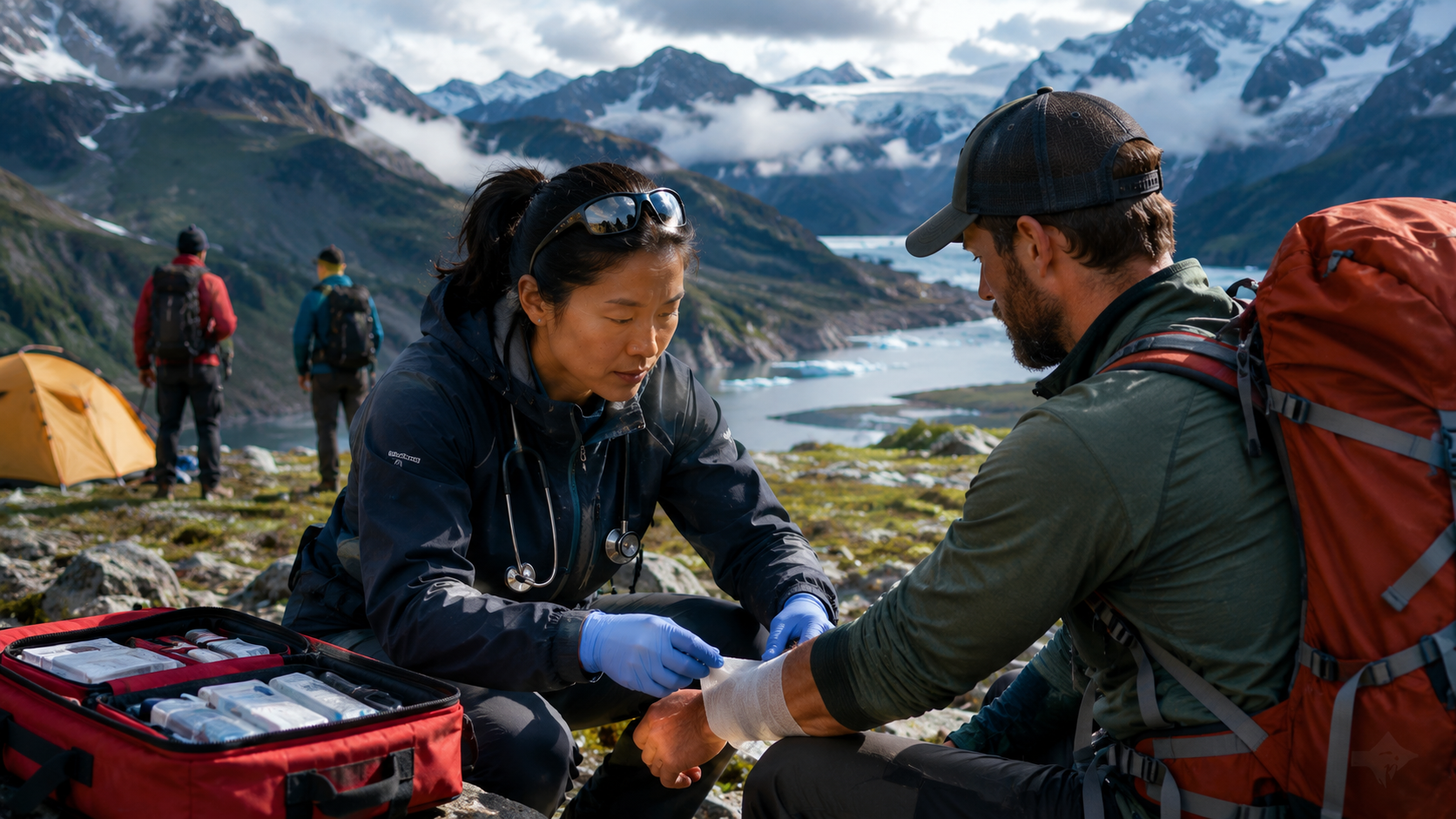
The MSc in Expedition and Wilderness Medicine is a two-year, part-time, 100% online postgraduate programme designed for registered healthcare professionals who want advanced expertise in delivering healthcare in remote, austere, unpredictable and environmentally challenging settings. The programme is validated by the University of South Wales (USW) and comprises 180 credits, with the first 120 credits delivered through the postgraduate-diploma stage and the second year focused on research methodology, critical appraisal and a substantial professional project. Students develop evidence-based skills in expedition preparation, emergency and evacuation planning, environmental medicine, remote clinical decision-making, leadership and management of medical problems when conventional healthcare resources are limited.
For Caribbean healthcare professionals, the programme has particularly strong relevance because the region combines tropical environments, mountainous terrain, marine and island settings, adventure tourism, remote communities and significant exposure to hurricanes, floods and other natural disasters. The curriculum's dedicated focus on tropical environments, ocean/river/water settings and natural-disaster and relief management makes the degree applicable beyond traditional expedition medicine—including emergency preparedness, disaster response, humanitarian work, cruise and maritime medicine, adventure tourism, international NGOs and remote clinical services. The programme can therefore help Caribbean doctors, nurses, paramedics, military medics and other healthcare professionals develop a specialist profile that is relevant to both regional needs and international expedition and wilderness opportunities.
Travel for both work and pleasure is becoming increasingly prevalent and travellers are seeking more adventurous trips going off the beaten path and challenging themselves.
In this emerging market, current job adverts are asking for doctors and other healthcare professionals (HCPs) with training, experience and specialisation in wilderness and expedition medicine. This is where a master's in extreme medicine can help.
Examples may include:
Adventure holidays
Charity work
Overseas employment: scenarios could be anything from climate research expeditions, treks and charity work, to going into space.
Our experienced faculty focus upon the practicalities of preparing for the expedition and also on the physiological and pathological impacts of expedition in remote and extreme locations.
The successful completion of this part-time and flexible wilderness medicine course will enable graduates to:
Apply evidence-based clinical skills and knowledge to minimise risk and maximise health before, during and after expeditions.
Develop skills and knowledge to anticipate, plan for and treat common and potential health problems which may arise on expeditions.
Deliver leadership to teams in multi-agency, multi-cultural and/or international contexts.
Become leaders in the field of Expedition and Wilderness Medicine.
Complete a written project dedicated to an area of personal interest in this specialist area.
Entry Requirements
Applicants will typically need:
A first degree or equivalent international qualification in a relevant healthcare field, such as medicine or nursing.
Registration as a healthcare professional is expected for the programme.
Registered healthcare professionals without a conventional recognised degree may be considered individually, based on prior professional experience and qualifications.
In some cases, applicants may be required to complete a piece of work demonstrating postgraduate-level academic and clinical capability.
Updated CV including address and date of birth.
Undergraduate degree certificate.
Professional/academic reference.
Personal statement explaining the motivation for undertaking the programme.
Evidence of English-language proficiency where required.
For applicants whose first language is not English, Diploma MSc states that IELTS 6.0 overall with a minimum of 5.5 in each band, or an equivalent qualification, is accepted for the USW pathway.
Who is this course for?
Applicants will typically be registered healthcare professionals with some experience or interest in the area of expedition and wilderness medicine who wish to enhance their knowledge, skills and understanding in order to fulfil the role of an expedition medic or otherwise specialise in extreme medicine. These include:
GPs
Allied Health Professionals
Nurses
Military Medics
Paramedics
Medics
Career Opportunities
Expedition Medicine Specialist / Expedition Medic
Wilderness Medicine Practitioner
Disaster and Emergency Response Specialist
Humanitarian Healthcare Professional
Adventure Tourism Medical Advisor
Cruise and Maritime Medical Professional
Remote and Austere Healthcare Practitioner
NGO / International Relief Medical Specialist
Military or Defence Expedition Medical Specialist
Disaster Preparedness and Medical Planning Consultant
Programme Highlights
This module establishes the foundation for safe and effective expedition medicine. Students learn how to conduct pre-expedition screening and medical assessments, prepare participants physically and mentally, develop expedition timelines, plan evacuations and address in-country training requirements. For Caribbean professionals, these skills can be applied to adventure tourism, marine excursions, remote community healthcare and international expeditions where appropriate preparation can substantially reduce medical risk.
Students examine the clinical and operational challenges of providing healthcare in cold, high-altitude and mountainous environments. Topics include expedition and emergency planning, situational awareness, group health, medical kits, environmental considerations and mental health. Although the Caribbean is predominantly tropical, this module broadens a professional's international expedition capability and prepares graduates for work across different geographic and climatic environments.
This module is particularly relevant to Caribbean healthcare professionals because it focuses on healthcare delivery during ocean, river and water-based expeditions. Students examine emergency planning, situational awareness, group health, medical kits, environmental hazards and mental-health considerations while learning to adapt treatment to aquatic and remote conditions. The knowledge can be valuable in Caribbean maritime tourism, cruise operations, diving and water-sport environments, as well as international expedition work.
This module addresses the medical and operational challenges of desert and tropical environments, including expedition planning, situational awareness, group health, medical equipment, environmental medicine and mental health. It is one of the most directly applicable modules for Caribbean practitioners because tropical climate, heat, humidity, environmental exposure and remote locations are common features of the region. The module develops the ability to adapt clinical management to environmental constraints rather than relying solely on conventional hospital-based approaches.
Students develop advanced approaches to managing common medical conditions when resources are limited and evacuation may be difficult. The curriculum covers cardiovascular and respiratory conditions, endocrine and neurological problems, mental health, women's health, skin and wounds, musculoskeletal conditions, ophthalmic problems and dental issues. The emphasis is on understanding how environmental conditions and limited resources can change diagnosis, treatment and the overall success of an expedition.
This is particularly valuable for the Caribbean because the module transfers expedition and wilderness medicine principles into natural-disaster and emergency-relief scenarios. Students address emergency planning, situational awareness, public health, medical kits, environmental considerations and mental health while learning to provide safe care in austere environments. The skills can be relevant to hurricane response, flood emergencies, earthquake response, humanitarian missions and other disaster situations across the region and internationally.
The first MSc module in Year 2 develops students' ability to critically evaluate clinical evidence and understand research methodologies relevant to Expedition and Wilderness Medicine. Delivered over 12 weeks, it prepares students to assess research quality, interpret evidence and develop a rigorous foundation for their professional project. This is especially useful for healthcare professionals who want to move beyond clinical practice into research, policy, education or specialist leadership.
The final MSc component enables each student to undertake a clinically relevant professional project connected to their practice or specialist interests. Students initially develop an approximately 1,500-word proposal, followed by a 10,500-word professional project/dissertation, with tutor guidance and substantial independent study. For a Caribbean professional, this creates an opportunity to investigate a locally relevant issue such as hurricane medical preparedness, remote-island healthcare, adventure tourism safety, disaster medicine, maritime healthcare or tropical-environment clinical risk.
Related Courses
Introduction to Global Mental Health and Wellbeing (Short Course)
Qualification: Micro-Credentials / Short Courses
Duration: 13 weeks
Tuition: £1,543
View ProgrammeMental Health over the Life Course (Short Course)
Qualification: Micro-Credentials / Short Courses
Duration: 13 weeks
Tuition: £1,543
View ProgrammeHealthcare Management: Principles and Practices (Short Course)
Qualification: Micro-Credentials / Short Courses
Duration: 13 weeks
Tuition: £1,543
View ProgrammeExpedition and Wilderness Medicine PGDip
Validated by University of South Wales
Duration
12 monthsStudy Mode
OnlineTotal Tuition
£4,800Monthly Payment
—Qualification
Postgraduate DiplomaStart Date
Jan, Mar, May, Jul, Sep, NovProgramme Overview
Our part time, online Postgraduate Diploma in Expedition and Wilderness Medicine is designed specifically for healthcare professionals like you, eager to advance their careers in this sought-after and niche field. This Expedition Medicine course allows you to improve your knowledge, skills and confidence in the most adaptable manner through our comprehensive extreme medicine programmes.
Are you keen to move beyond traditional medical roles, learn how to make critical decisions in emergency scenarios, and contribute to saving lives across the globe?
With the rise in travel for work and leisure, individuals are increasingly seeking thrilling, off-the-grid adventures, pushing their limits. And this growing trend opens doors for healthcare professionals, including doctors, who are skilled in wilderness and expedition medicine.
Job opportunities in this domain are diverse, ranging from adventure tourism and charitable initiatives to overseas roles in various settings like climate research missions, treks, humanitarian projects, and even space exploration.
Our wilderness medicine diploma is led by seasoned experts, focusing on practical preparation for expeditions and the physiological and medical challenges faced in remote and extreme environments.
At Learna | Diploma MSc our goal is to revolutionise global healthcare with accessible, top-quality education. Our programmes offer cost-effective learning solutions, ensuring a high return on investment for our students.
Completion of this expedition medicine diploma will enable graduates to:
Apply evidence-based clinical skills and knowledge to minimise risk and maximise health before, during and after expeditions.
Demonstrate the ability to provide sound clinical and situational judgement in environments prone to rapid change and uncertain outcomes.
Develop skills and knowledge to anticipate, plan for and treat common and potential health problems which may arise on expeditions.
Gain lifelong learning and advanced problem-solving skills that they can apply within the field of expedition medicine.
Apply the knowledge, approaches and skills gained within expedition medicine to wider emergency situations.
Deliver leadership to teams in multi-agency, multi-cultural and/or international contexts.
Become leaders in the field of expedition medicine and wilderness medicine.
Entry Requirements
Since our courses are conducted entirely online, they are accessible to both UK and international registered healthcare professionals.
Applicants will typically hold a first degree or equivalent (including international qualifications) in a relevant professional healthcare field, such as a medical or nursing degree.
Registered healthcare professionals without these recognised qualifications will be considered on an individual basis and a wide range of prior experience may be taken into account. In some cases, applicants may be asked to submit a piece of work for assessment in order to confirm that they are able to work comfortably at postgraduate level, and demonstrate the requisite clinical and professional knowledge.
Documents Required
A copy of your updated CV including your address and date of birth.
A copy of your undergraduate degree certificate.
The name and email address of someone who is able to provide a reference, this can be a work colleague, employer or former tutor.
A detailed personal statement explaining why you would like to undertake the course.
A copy of your proof of English competency (see below).
English Language Requirements Proficiency in the English language is also essential to completing our courses. If English is NOT your first language, we ask for proof of competency during the application process. We are able to accept an IELTS overall score of 6.0 (with a minimum of 5.5 for each band) or an equivalent qualification.
If you do not meet these requirements, please don’t worry. The University of South Wales run a number of English Language Programmes at the Centre for International English to prepare you for your academic studies. You can also contact our admissions team on admissions@diploma-msc.com for more information on the qualifications we accept.
Should you have already successfully completed the 1 year Postgraduate Diploma and wish to convert to the MSc and complete only the second year of the programme this is possible. Please contact our admissions department admissions@diploma-msc.com to find out more.
Who is this course for?
Applicants will typically be registered healthcare professionals with some experience or interest in the area of expedition medicine and wilderness medicine who wish to enhance their knowledge, skills, and understanding in order to fulfil the role of an expedition medic or otherwise specialise in expedition and wilderness medicine. These include:
GPs
Allied Health Professionals
Nurses
Military Medics
Paramedics
Medics
Programme Highlights
Programme highlights coming soon.
Related Courses
Introduction to Global Mental Health and Wellbeing (Short Course)
Qualification: Micro-Credentials / Short Courses
Duration: 13 weeks
Tuition: £1,543
View ProgrammeMental Health over the Life Course (Short Course)
Qualification: Micro-Credentials / Short Courses
Duration: 13 weeks
Tuition: £1,543
View ProgrammeHealthcare Management: Principles and Practices (Short Course)
Qualification: Micro-Credentials / Short Courses
Duration: 13 weeks
Tuition: £1,543
View ProgrammeApply for This Programme
You need an UpCaria account before starting your application. Log in to your existing account or create a new one.
🎓 Scholarship Eligibility Checker
Select your country to check whether you may qualify for a scholarship for this programme.