

Cosmetic and Aesthetic Medicine MSc
Validated by University of South Wales
Duration
24 MonthsStudy Mode
OnlineTotal Tuition
£9,200Monthly Payment
—Qualification
Master’s Degree (MSc / MA / MPH)Start Date
Jan, Mar, May, Jul, Sep, NovProgramme Overview
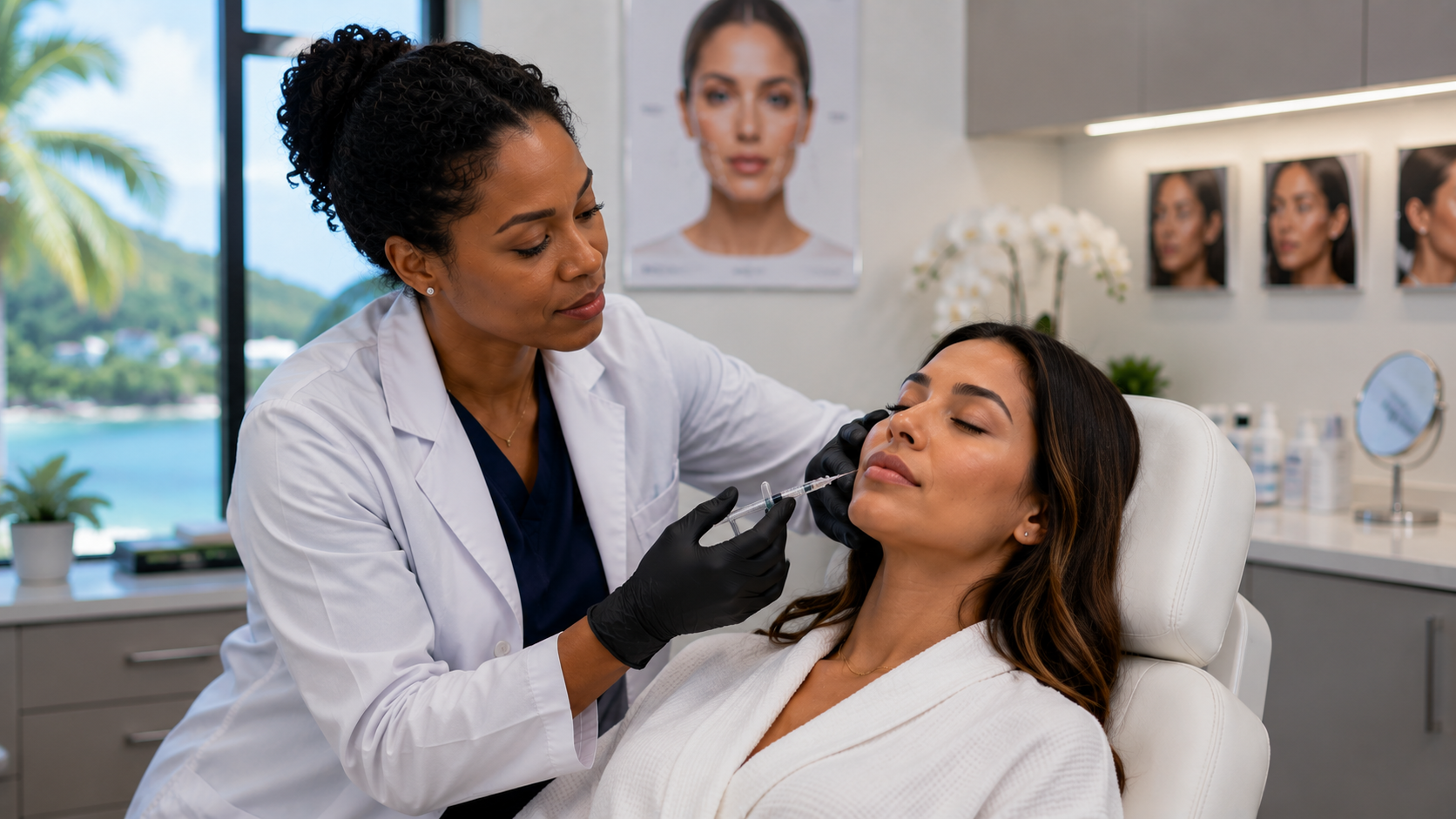
The MSc in Cosmetic and Aesthetic Medicine, validated by the University of South Wales, is a fully online, part-time postgraduate programme designed for qualified healthcare professionals who want to develop advanced knowledge and critical decision-making skills in cosmetic and aesthetic medicine. The two-year MSc comprises eight modules and 180 credits, with the first 120 credits delivered through the Postgraduate Diploma stage. The curriculum covers facial anatomy and physiology, professional and ethical issues, botulinum toxin treatments, dermal fillers, skin treatments, hair disorders, anti-ageing approaches, research methodology and a substantial professional project. The programme is particularly relevant to physicians, dentists, dental therapists, pharmacists and nurses seeking to expand into or strengthen their practice in aesthetic medicine. The programme is also CPD-accredited by the Federation of the Royal Colleges of Physicians of the UK.
Caribbean-Focused Value Proposition
For Caribbean healthcare professionals, this MSc offers an opportunity to gain internationally oriented postgraduate education without relocating from the region, since the programme is delivered 100% online and can be completed alongside clinical employment. This is particularly relevant to the Caribbean's expanding private healthcare, dermatology, wellness, medical tourism and aesthetic-services markets, where professionals increasingly need evidence-based knowledge of non-surgical aesthetic procedures, patient safety, ethical practice and emerging technologies. The programme's emphasis on facial anatomy, injectables, skin health, hair disorders, anti-ageing medicine, clinical decision-making and research can support professionals interested in developing aesthetic services within appropriately regulated clinical environments across Jamaica, Trinidad and Tobago, Barbados, Guyana, The Bahamas, the Eastern Caribbean and other regional markets. However, graduates should confirm recognition, registration and scope-of-practice requirements with their individual Caribbean medical, nursing, dental or pharmacy regulatory authority before undertaking aesthetic procedures.
Accredited for CPD by the Federation of the Royal Colleges of Physicians of the UK
Entry Requirements
Since our courses are conducted entirely online, they are accessible to both UK and international registered healthcare professionals.
Applicants will typically hold a first degree or equivalent (including international qualifications) in a relevant professional healthcare field, such as a medical or nursing degree.
Registered healthcare professionals without these recognised qualifications will be considered on an individual basis and a wide range of prior experience may be taken into account. In some cases, applicants may be asked to submit a piece of work for assessment in order to confirm that they are able to work comfortably at postgraduate level, and demonstrate the requisite clinical and professional knowledge.
Documents Required
A copy of your updated CV including your address and date of birth.
A copy of your undergraduate degree certificate.
The name and email address of someone who is able to provide a reference, this can be a work colleague, employer or former tutor.
A detailed personal statement explaining why you would like to undertake the course.
A copy of your proof of English competency (see below).
English Language Requirements Proficiency in the English language is also essential to completing our courses. If English is NOT your first language, we ask for proof of competency during the application process. We are able to accept an IELTS overall score of 6.0 (with a minimum of 5.5 for each band) or an equivalent qualification.
If you do not meet these requirements, please don’t worry. The University of South Wales run a number of English Language Programmes at the Centre for International English to prepare you for your academic studies. You can also contact our admissions team on admissions@diploma-msc.com for more information on the qualifications we accept.
Should you have already successfully completed the 1 year Postgraduate Diploma and wish to convert to the MSc and complete only the second year of the programme this is possible. Please contact our admissions department admissions@diploma-msc.com to find out more.
Who is this course for?
The programme is primarily suited to:
Medical doctors and physicians
Dentists
Dental therapists
Registered nurses
Pharmacists
Healthcare professionals already working in dermatology or aesthetic medicine
Clinicians seeking to introduce or expand evidence-based aesthetic services
Healthcare professionals interested in private aesthetic clinics or medical-spa environments
Practitioners seeking an international postgraduate qualification in cosmetic medicine
Healthcare professionals interested in aesthetic medicine research, education or clinical leadership
Career Opportunities
Aesthetic Medicine Practitioner
Cosmetic Medicine Physician
Aesthetic Clinic Medical Director
Cosmetic Dermatology Practitioner
Non-Surgical Aesthetic Medicine Practitioner
Aesthetic Medicine Clinical Lead
Medical Aesthetics Consultant
Aesthetic Medicine Educator or Clinical Trainer
Aesthetic Medicine Researcher
Private Aesthetic/Medical Wellness Clinic Entrepreneur
Programme Highlights
This foundational module establishes the scientific and professional framework for aesthetic medicine. Students examine the detailed anatomy of the face—including the skin, muscles, fat pads, blood vessels, nerves and bones—and investigate how these structures change with ageing. Importantly for safe aesthetic practice, the module also introduces facial assessment, treatment planning, informed consent, documentation, standards of care, ethics and medicolegal considerations. For Caribbean practitioners, this provides an important foundation for delivering aesthetic services safely and professionally within local regulatory requirements.
The Toxin Treatments module provides an in-depth examination of botulinum toxin, one of the most established modalities in aesthetic medicine. Students explore its pharmaceutical history, pharmacokinetics and pharmacodynamics, indications, patient selection, injection techniques, safety considerations, adverse effects, complications and combination treatments. The module also addresses the ethical dimensions and short- and long-term implications of treatment, helping practitioners develop evidence-based decision-making skills rather than relying solely on procedural technique.
This module focuses on the scientific and clinical application of dermal fillers in addressing facial ageing and volume loss. Students examine facial fat pads, hyaluronic acid products, cross-linking, duration of effect, indications, patient expectations and complications, as well as temporary and permanent non-hyaluronic-acid fillers. Special attention is given to areas such as the lips and hands and to the prevention and management of complications. This is particularly relevant for practitioners interested in non-surgical facial enhancement and injectable aesthetics.
The Skin module examines the anatomy and physiology of normal skin and the changes associated with ageing and environmental damage. Students explore skin types, ultraviolet exposure, sun damage, sun protection, ablative and non-ablative treatments, lasers, IPL, chemical/dermal peels, skin repair and emerging aesthetic technologies. For Caribbean healthcare professionals, the focus on skin health and environmental exposure is particularly valuable given the region's high levels of ultraviolet radiation and the importance of culturally and clinically appropriate skin assessment and treatment.
This module addresses the biology of hair growth, hair loss and unwanted hair, linking hair-follicle anatomy and physiology to clinical treatment. Students explore conditions associated with unwanted hair, including hormonal disorders and folliculitis, as well as laser and IPL hair reduction. The module also examines male-pattern hair loss, non-surgical approaches, pharmacological treatments and surgical options. It therefore provides a broader understanding of aesthetic hair management rather than limiting the subject to cosmetic hair removal.
Other Aesthetic Approaches examines the relationship between ageing, hormones and wider lifestyle factors. Topics include menopause, andropause, somatopause, hormonal replacement, nutrition, vitamins, exercise, platelet-rich plasma, injection lipolysis, microneedling, derma-rollers, ultrasound and radiofrequency technologies. The module encourages students to critically evaluate the evidence behind different anti-ageing interventions, helping practitioners distinguish scientifically supported approaches from treatments with limited or emerging evidence.
The Research Methodologies and Critical Appraisal module develops the research literacy required for postgraduate clinical practice. Students learn to interpret epidemiological and statistical information, assess research methodologies, understand concepts such as prevalence, sensitivity and specificity, interpret meta-analyses and apply statistical tests such as t-tests, ANOVA and chi-square. The module also introduces qualitative research, evidence-based practice, health economics, audit and quality improvement. These skills are valuable for Caribbean practitioners seeking to introduce evidence-based aesthetic services and evaluate clinical outcomes in their own practice environments.
The Professional Project is the culminating research and practice-based component of the MSc. Students undertake an independently developed project connected to a clinically relevant area of their professional practice. Projects may include literature reviews, clinical or organisational audits, implementation of evidence-based practice, qualitative or quantitative research, case-based reviews, service-quality assessments or organisational evaluations. The module provides an opportunity for Caribbean healthcare professionals to investigate an issue directly relevant to aesthetic medicine in their own market and develop recommendations for improving clinical practice or service delivery.
Related Courses
Introduction to Global Mental Health and Wellbeing (Short Course)
Qualification: Micro-Credentials / Short Courses
Duration: 13 weeks
Tuition: £1,543
View ProgrammeMental Health over the Life Course (Short Course)
Qualification: Micro-Credentials / Short Courses
Duration: 13 weeks
Tuition: £1,543
View ProgrammeHealthcare Management: Principles and Practices (Short Course)
Qualification: Micro-Credentials / Short Courses
Duration: 13 weeks
Tuition: £1,543
View ProgrammeCosmetic Medicine PGCert
Validated by University of South Wales
Duration
6 MonthsStudy Mode
OnlineTotal Tuition
£2,250Monthly Payment
—Qualification
Postgraduate CertificateStart Date
Jan, Mar, May, Jul, Sep, NovProgramme Overview
There has been a dramatic growth in the popularity of cosmetic procedures worldwide in recent years, including dermal fillers, laser treatment and more. This flexible, Postgraduate Certificate in Cosmetic Medicine course has been specifically designed for doctors, dentists, dental therapists, pharmacists and nurses who wish to improve their knowledge, skills and experience in cosmetic and aesthetic medicine.
This cosmetic medicine certification has been specifically designed to promote and enhance working professionals’ knowledge and ultimately their practice in cosmetic medicine, and complements separate, practice-based recognised prior learning (RPL) awards.
UK legislation is predicted to change in the near future, requiring cosmetic practitioners to be registered in order to practice, and the Joint Council for Cosmetic Practitioners (the JCCP) is at the forefront of this initiative, setting standards and competency frameworks for the industry in collaboration with the Cosmetic Practice Standards Authority (the CPSA). Learna is the only approved educational provider to deliver the Joint Council of Cosmetic Practitioners (JCCP) Fast Track Assessment and continues to support the promotion of enhancing the professional knowledge underpinning practice in cosmetic and aesthetic medicine.
This online cosmetic medicine course aligns with these standards and is an entry point to our Observed Structured Clinical Examination (OSCE) in Aesthetic Injectable Practice. For more information about the OSCE, please visit our Certificate in Cosmetic Medicine with Assessment of Aesthetic Injectable Practice page.
On completion of this dermal filler qualification, you will be able to:
Make professional decisions, incorporating evidence based rationale in a variety of diverse and complex situations related to cosmetic medicine.
Apply advanced problem-solving skills in clinical practice.
Demonstrate leadership in the delivery and advancement of cosmetic medicine.
Demonstrate leadership of teams in multi-agency, multi-cultural and/or international contexts.
Demonstrate evaluation skills in the delivery of care to patients.
Accredited for CPD by the Federation of the Royal Colleges of Physicians of the UK
Entry Requirements
Since our courses are conducted entirely online, they are accessible to both UK and international registered healthcare professionals.
Applicants will typically hold a first degree or equivalent (including international qualifications) in a relevant professional healthcare field, such as a medical or nursing degree.
Registered healthcare professionals without these recognised qualifications will be considered on an individual basis and a wide range of prior experience may be taken into account. In some cases, applicants may be asked to submit a piece of work for assessment in order to confirm that they are able to work comfortably at postgraduate level, and demonstrate the requisite clinical and professional knowledge.
Documents Required
A copy of your updated CV including your address and date of birth.
A copy of your undergraduate degree certificate.
The name and email address of someone who is able to provide a reference, this can be a work colleague, employer or former tutor.
A detailed personal statement explaining why you would like to undertake the course.
A copy of your proof of English competency (see below).
English Language Requirements Proficiency in the English language is also essential to completing our courses. If English is NOT your first language, we ask for proof of competency during the application process. We are able to accept an IELTS overall score of 6.0 (with a minimum of 5.5 for each band) or an equivalent qualification.
If you do not meet these requirements, please don’t worry. The University of South Wales run a number of English Language Programmes at the Centre for International English to prepare you for your academic studies. You can also contact our admissions team on admissions@diploma-msc.com for more information on the qualifications we accept.
Who is this course for?
The Postgraduate Certificate in Cosmetic Medicine course is aimed at doctors, dentists, dental therapists, pharmacists and nurses whose roles are evolving with increasing demand amongst these specialists for a postgraduate qualification to help support their professional learning and clinical development.
Programme Highlights
Programme highlights coming soon.
Related Courses
Introduction to Global Mental Health and Wellbeing (Short Course)
Qualification: Micro-Credentials / Short Courses
Duration: 13 weeks
Tuition: £1,543
View ProgrammeMental Health over the Life Course (Short Course)
Qualification: Micro-Credentials / Short Courses
Duration: 13 weeks
Tuition: £1,543
View ProgrammeHealthcare Management: Principles and Practices (Short Course)
Qualification: Micro-Credentials / Short Courses
Duration: 13 weeks
Tuition: £1,543
View ProgrammeCosmetic Medicine PGDip
Validated by University of South Wales
Duration
12 monthsStudy Mode
OnlineTotal Tuition
£4,800Monthly Payment
—Qualification
Postgraduate DiplomaStart Date
Jan, Mar, May, Jul, Sep, NovProgramme Overview
There has been a dramatic growth in the popularity of cosmetic procedures worldwide in recent years, including dermal fillers, laser treatment and more. As demand rises and regulations tighten, a diploma in cosmetics is a critical step to building a credible and successful career in aesthetic medicine. Maintaining trust in the surgeon-patient relationship hinges on receiving the right cosmetic training and earning a credible qualification.
Unlike most level 7 diploma in aesthetics, our diploma in cosmetic medicine is university validated. This means that you graduate with an internationally recognised qualification from an established higher education institution. What's more, with our flexible, online cosmetic diploma that fast-track career progression for our students, you're potentially earning a postgraduate-level salary sooner.
This flexible, part-time diploma in cosmetic medicine has been specifically designed to promote and enhance working professionals’ knowledge and ultimately their practice in cosmetic medicine, and complements separate, practice-based recognised prior learning (RPL) awards.
Our aesthetic medicine courses have been specifically designed for doctors, dentists, dental therapists, pharmacists and nurses who wish to improve their knowledge, skills and experience in cosmetic and aesthetic medicine.
On completion of this diploma in cosmetics you will be able to:
Develop analytical and critical appraisal skills in both theory and research related to cosmetic medicine.
Demonstrate critical application of research to cosmetic medicine practice.
Professional decision making: incorporating evidence based rationale in a variety of diverse and complex situations related to cosmetic medicine.
To be able to apply advanced problem-solving skills in clinical practice.
Demonstrate leadership in the delivery and advancement of cosmetic medicine.
Demonstrate leadership of teams in multi-agency, multi-cultural and/or international contexts.
Demonstrate evaluation skills in the delivery of care to patients.
Accredited for CPD by the Federation of the Royal Colleges of Physicians of the UK
Entry Requirements
Since our courses are conducted entirely online, they are accessible to both UK and international registered healthcare professionals.
Applicants will typically hold a first degree or equivalent (including international qualifications) in a relevant professional healthcare field, such as a medical or nursing degree.
Registered healthcare professionals without these recognised qualifications will be considered on an individual basis and a wide range of prior experience may be taken into account. In some cases, applicants may be asked to submit a piece of work for assessment in order to confirm that they are able to work comfortably at postgraduate level, and demonstrate the requisite clinical and professional knowledge.
Documents Required
A copy of your updated CV including your address and date of birth.
A copy of your undergraduate degree certificate.
The name and email address of someone who is able to provide a reference, this can be a work colleague, employer or former tutor.
A detailed personal statement explaining why you would like to undertake the course.
A copy of your proof of English competency (see below).
English Language Requirements Proficiency in the English language is also essential to completing our courses. If English is NOT your first language, we ask for proof of competency during the application process. We are able to accept an IELTS overall score of 6.0 (with a minimum of 5.5 for each band) or an equivalent qualification.
If you do not meet these requirements, please don’t worry. The University of South Wales run a number of English Language Programmes at the Centre for International English to prepare you for your academic studies. You can also contact our admissions team on admissions@diploma-msc.com for more information on the qualifications we accept.
Should you have already successfully completed the 1 year Postgraduate Diploma and wish to convert to the MSc and complete only the second year of the programme this is possible. Please contact our admissions department admissions@diploma-msc.com to find out more.
Who is this course for?
The diploma in aesthetic medicine is aimed at doctors, dentists, dental therapists, pharmacists and nurses whose roles are evolving with increasing demand amongst these specialists for a level 7 diploma in aesthetics to help support their professional learning and clinical development.
Programme Highlights
Programme highlights coming soon.
Related Courses
Introduction to Global Mental Health and Wellbeing (Short Course)
Qualification: Micro-Credentials / Short Courses
Duration: 13 weeks
Tuition: £1,543
View ProgrammeMental Health over the Life Course (Short Course)
Qualification: Micro-Credentials / Short Courses
Duration: 13 weeks
Tuition: £1,543
View ProgrammeHealthcare Management: Principles and Practices (Short Course)
Qualification: Micro-Credentials / Short Courses
Duration: 13 weeks
Tuition: £1,543
View ProgrammeApply for This Programme
You need an UpCaria account before starting your application. Log in to your existing account or create a new one.
🎓 Scholarship Eligibility Checker
Select your country to check whether you may qualify for a scholarship for this programme.

